
Introduction
Plastic water pipes and fittings represent a significant advancement in potable water distribution and infrastructure, largely displacing traditional metallic systems. Their position in the industry chain extends from petrochemical feedstock production (polyethylene, polypropylene, PVC, etc.) through polymerization, extrusion (pipe manufacturing), injection molding (fitting production), and ultimately to installation and long-term operation within residential, commercial, and municipal water systems. Core performance characteristics center around fluid conveyance efficiency, long-term durability against corrosion and chemical degradation, pressure handling capabilities, and ease of installation – factors which directly impact lifecycle costs and water quality preservation. This guide provides a detailed technical overview of these systems, encompassing materials, manufacturing, performance, failure modes, and relevant industry standards.
Material Science & Manufacturing
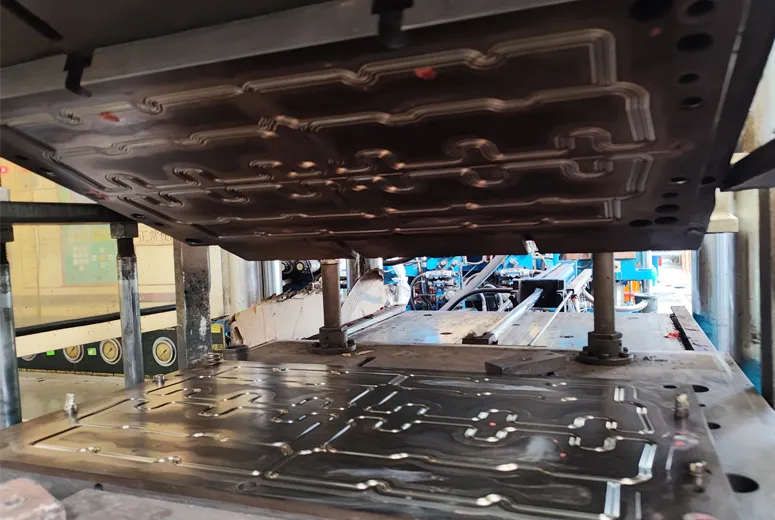
The prevalent materials used in plastic water pipe systems are Polyvinyl Chloride (PVC), Chlorinated Polyvinyl Chloride (CPVC), Polypropylene (PP), Polyethylene (PE – including HDPE and PEX), and occasionally Polybutylene (PB). PVC’s strength derives from its amorphous structure, enhanced by plasticizers. CPVC incorporates chlorine to improve temperature resistance. PP offers excellent chemical resistance and is commonly used for hot and cold water distribution. PE, available in varying densities, provides flexibility and is often utilized for cold water and underground applications. PEX (cross-linked polyethylene) boasts superior temperature and pressure ratings alongside flexibility. Manufacturing processes vary by material. PVC and CPVC pipes are commonly produced via extrusion, where molten polymer is forced through a die to create the desired pipe diameter and wall thickness. Critical parameters include extrusion temperature control (to prevent degradation), die design (for dimensional accuracy), and cooling rates (to maintain shape and prevent warping). Fittings for PVC/CPVC are largely injection molded, requiring precise mold temperature and injection pressure control to achieve consistent dimensions and prevent sink marks or weld lines. PE pipes utilize extrusion or co-extrusion for multi-layer pipes (e.g., with barrier layers). PEX is produced through a crosslinking process, enhancing its structural integrity and temperature resistance. Quality control at each stage is crucial, involving hydrostatic testing of pipes to ensure pressure integrity and dimensional checks of both pipes and fittings.

Performance & Engineering
The performance of plastic water pipes is dictated by several key engineering principles. Hydrostatic strength, defined by the ability to withstand internal pressure without failure, is a primary concern, governed by Barlow’s formula (S = P D / 2t, where S=pressure rating, P=internal pressure, D=pipe outer diameter, and t=wall thickness). Stress analysis, utilizing Finite Element Analysis (FEA), is employed during the design phase to optimize pipe and fitting geometries for maximum strength and minimal stress concentration. Creep resistance, the tendency of the material to deform over time under sustained stress, is particularly critical for PE and PEX systems. Environmental stress cracking (ESC), caused by the combined effect of stress and chemical exposure, is a potential failure mode, especially for PVC and CPVC. The coefficient of thermal expansion differs significantly between plastic pipes and traditional metallic pipes, necessitating careful consideration in installation to accommodate expansion and contraction and prevent stress on joints. Permeation rates of gases (oxygen) and liquids (water) through the pipe wall are relevant, especially for PEX systems, influencing water quality. Compliance requirements, such as NSF/ANSI 61 (for potable water safety) and ASTM D1785/D2412 (for PVC pipe dimensions and performance), mandate strict adherence to material and manufacturing standards.
Technical Specifications
| Material | Pressure Rating (PSI) @ 73°F | Temperature Range (°F) | Outside Diameter (inches) |
|---|---|---|---|
| PVC Schedule 40 | 400 | 140°F Max | 0.5 to 12 |
| CPVC Schedule 80 | 600 | 180°F Max | 0.5 to 12 |
| PP-R | 350 | 180°F Max | 0.5 to 6 |
| HDPE DR11 | 160 | 140°F Max | 0.5 to 63 |
| PEX-AL-PEX | 160 | 180°F Max | 0.5 to 3 |
| PB | 100 | 180°F Max | 0.5 to 3 |
Failure Mode & Maintenance
Plastic water pipes, while durable, are susceptible to several failure modes. Long-term hydrostatic stress can lead to slow crack growth (SCG), particularly in PVC, initiated by microscopic flaws. Environmental stress cracking (ESC), as mentioned previously, arises from the combined effects of stress and chemical attack, commonly caused by chlorinated water or aggressive soil conditions. UV degradation, especially for exposed piping, causes embrittlement and loss of impact resistance. Thermal expansion and contraction cycles can induce stress on joints, leading to leaks. Freeze-thaw cycles can cause pipes to rupture, especially if not properly insulated. Delamination can occur in multi-layer pipes if bonding between layers fails. Maintenance primarily focuses on preventative measures: proper insulation to prevent freezing, avoiding direct sunlight exposure, utilizing appropriate jointing compounds, and regular inspection for leaks or visual signs of degradation. Repair typically involves cutting out the damaged section and replacing it with new pipe and fittings, using appropriate joining methods (solvent welding for PVC/CPVC, compression fittings for PEX, etc.). Preventative surge protection devices can mitigate water hammer, reducing stress on the system. Regular water quality testing helps identify potential chemical factors contributing to degradation.
Industry FAQ
Q: What are the key differences between PVC and CPVC in terms of application?
A: CPVC is specifically designed for higher temperature applications, typically hot water distribution systems. Its chlorinated structure provides enhanced thermal stability compared to PVC, allowing it to withstand temperatures up to 180°F, whereas PVC is generally limited to 140°F. CPVC also exhibits greater resistance to chemical attack in some environments. PVC is often preferred for cold water distribution and irrigation due to its lower cost and adequate performance within those temperature ranges.
Q: How does the long-term creep resistance of PEX compare to that of HDPE?
A: PEX, due to its cross-linked structure, exhibits significantly superior creep resistance compared to HDPE. Under sustained pressure and temperature, HDPE will exhibit greater deformation over time. This makes PEX a more suitable choice for applications where dimensional stability is critical, such as radiant floor heating. HDPE is more commonly used for underground applications where creep is less of a concern.
Q: What is the impact of soil corrosivity on the lifespan of underground plastic pipes?
A: Highly corrosive soils can accelerate the degradation of plastic pipes, particularly PVC. Factors like pH, sulfate content, and the presence of stray electrical currents can contribute to chemical attack and stress cracking. Utilizing pipes with enhanced UV and chemical resistance, employing protective coatings, and ensuring proper bedding and backfill materials are crucial mitigation strategies.
Q: What are the best practices for solvent welding PVC pipes to ensure a leak-proof connection?
A: Proper surface preparation is paramount. Both the pipe and fitting surfaces must be clean, dry, and free of debris. Apply primer liberally to both surfaces, followed immediately by a uniform coat of solvent cement. Insert the pipe firmly into the fitting with a slight twisting motion to ensure even cement distribution. Hold the joint firmly for approximately 30 seconds to allow the cement to set. Avoid excessive cement, which can create internal obstructions.
Q: What are the advantages and disadvantages of using compression fittings with PEX piping?
A: Compression fittings offer a quick and relatively easy connection method for PEX, requiring no soldering or gluing. They are reusable, offering flexibility for future modifications. However, they are generally more expensive than PEX crimp or expansion fittings and require periodic tightening to maintain a leak-proof seal. Improper installation can lead to leaks due to insufficient compression or damage to the PEX tubing.
Conclusion
Plastic water pipes and fittings have revolutionized water distribution systems, offering advantages in terms of corrosion resistance, ease of installation, and cost-effectiveness. Understanding the specific material properties – PVC, CPVC, PP, PE, and PEX – and their corresponding manufacturing processes is fundamental to selecting the appropriate system for a given application. Careful consideration of engineering principles, including hydrostatic strength, creep resistance, and thermal expansion, is essential for ensuring long-term performance and reliability.
Ongoing research and development are focused on enhancing the durability, chemical resistance, and sustainability of plastic piping materials. Future advancements may include the incorporation of nanomaterials to improve mechanical properties, the development of more environmentally friendly plastic formulations, and the implementation of advanced monitoring systems to detect leaks and predict pipe failures. Adherence to industry standards and best practices remains paramount for ensuring the integrity and longevity of plastic water distribution infrastructure.