
Introduction
Isolation washers for dissimilar metals are critical components utilized in bolted joints where galvanic corrosion is a concern. These washers, typically constructed from non-conductive materials, physically and electrically isolate dissimilar metals – such as steel and aluminum – preventing the formation of a galvanic cell. This galvanic cell, when formed in the presence of an electrolyte (moisture, salt spray, etc.), drives corrosion of the more anodic metal. The industrial application of isolation washers spans numerous sectors, including aerospace, automotive, marine, power generation, and construction. Their implementation is directly tied to increasing the longevity and reliability of critical infrastructure and equipment. Core performance characteristics include dielectric strength, compressive strength, resistance to environmental degradation, and adherence to specific dimensional tolerances as defined by engineering drawings and industry standards. Failure to adequately isolate dissimilar metals leads to accelerated corrosion, structural weakening, and potential catastrophic failure of assembled components, leading to substantial cost implications related to repairs, replacements, and downtime.
Material Science & Manufacturing
The materials comprising isolation washers significantly impact their effectiveness. Common materials include non-reinforced nylon (6/6, 6/12), fiber-reinforced nylon (glass filled, typically 30-50% glass content), PTFE (Polytetrafluoroethylene), and phenolic resins. Nylon 6/6 offers good mechanical strength and temperature resistance up to approximately 85°C. Nylon 6/12 exhibits improved moisture resistance compared to 6/6. Fiber reinforcement enhances tensile strength and creep resistance but can reduce dielectric strength if the fiber orientation isn’t controlled. PTFE provides exceptional chemical resistance and a very low coefficient of friction, crucial in applications requiring easy assembly and disassembly. Phenolic resins offer high compressive strength and dimensional stability.
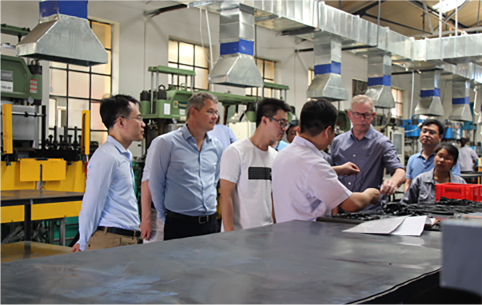
Manufacturing processes predominantly involve injection molding for nylon and phenolic materials, while PTFE washers are often compression molded or machined. Injection molding parameters – melt temperature, mold temperature, injection pressure, and cooling rate – are critical for controlling crystallinity, dimensional accuracy, and material properties. Fiber-reinforced materials require precise fiber orientation control during injection to maximize strength in the desired directions. Machining PTFE demands specialized tooling due to its low coefficient of friction and tendency to gall. Post-molding or machining operations often include dimensional inspection using coordinate measuring machines (CMMs) to ensure compliance with specified tolerances. Surface finish is also critical, as rough surfaces can compromise the dielectric integrity. Quality control also includes dielectric strength testing, using high-voltage testing apparatus to confirm the washer’s ability to resist electrical breakdown.
Performance & Engineering
The primary engineering function of isolation washers is to increase the electrical resistance between dissimilar metals to a level where corrosion current is negligible. This resistance is governed by Ohm’s Law (R = V/I) and is directly related to the material’s resistivity and the washer’s thickness. Force analysis is crucial, determining the compressive stress on the washer under preload. The washer must maintain its structural integrity and dielectric properties under this stress. Finite element analysis (FEA) is frequently used to model stress distribution and predict deformation. Environmental resistance is also critical. Exposure to UV radiation, temperature extremes, and chemical environments can degrade the material, reducing its dielectric strength and mechanical properties. PTFE and certain grades of nylon exhibit superior resistance to these factors.
Compliance requirements are dictated by industry-specific standards and customer specifications. Aerospace applications often require compliance with AMS (Aerospace Material Specification) standards. Automotive applications adhere to IATF 16949 quality management system requirements. Marine environments frequently mandate materials resistant to saltwater corrosion and UV degradation. Washers must also meet dimensional standards (ISO 273) and be free of defects (burrs, cracks, voids) that could compromise their performance. The selection of washer material and thickness depends on the anticipated galvanic potential difference between the dissimilar metals, the operating environment, and the applied preload. A larger potential difference and a more corrosive environment necessitate a thicker, more robust washer.
Technical Specifications
| Material | Dielectric Strength (kV/mm) | Tensile Strength (MPa) | Operating Temperature Range (°C) | Compressive Strength (MPa) | Water Absorption (%) 24hr Immersion |
|---|---|---|---|---|---|
| Nylon 6/6 | 20-30 | 80-100 | -40 to 85 | 100-150 | 0.8-1.5 |
| Nylon 6/12 | 25-35 | 70-90 | -40 to 100 | 90-140 | 0.5-1.0 |
| Glass-Filled Nylon (30% GF) | 15-25 | 150-200 | -40 to 120 | 200-250 | 0.3-0.7 |
| PTFE | >100 | 20-30 | -200 to 260 | 50-70 | <0.1 |
| Phenolic Resin | 50-70 | 120-180 | -50 to 150 | 250-350 | 0.5-1.2 |
| Polypropylene | 10-20 | 30-40 | -20 to 100 | 60-80 | 0.2-0.4 |
Failure Mode & Maintenance
Common failure modes for isolation washers include dielectric breakdown, cracking due to excessive stress, creep deformation under sustained load, and environmental degradation. Dielectric breakdown occurs when the voltage difference exceeds the material’s dielectric strength, creating a conductive path and negating the isolation effect. Cracking can result from improper installation, excessive preload, or material defects. Creep deformation, particularly in nylon materials, can lead to reduced clamping force and eventual loss of isolation. Environmental degradation, caused by UV radiation, chemical exposure, or temperature extremes, reduces the material’s mechanical and dielectric properties. Oxidation can embrittle the material leading to failure.
Maintenance of isolation washers is typically preventative. Regular inspection of bolted joints for signs of corrosion is crucial. This includes visual inspection for rust, pitting, or discoloration. Torque verification ensures proper preload is maintained. In harsh environments, periodic replacement of washers is recommended, following a schedule based on exposure conditions and operating parameters. If dielectric breakdown is suspected, the washer should be replaced immediately. When replacing washers, ensure the correct material and dimensions are used, and that proper installation procedures are followed. Avoid using abrasive cleaners or solvents that could damage the material. Documentation of inspection and replacement activities is essential for maintaining a reliable system.
Industry FAQ
Q: What is the primary benefit of using an isolation washer compared to simply using a non-conductive coating on the bolt or mating surface?
A: While coatings can provide some degree of isolation, isolation washers offer a more robust and reliable solution. Coatings are prone to damage (scratches, abrasion) that compromises their insulating properties. Washers provide a consistent, defined insulating barrier that is less susceptible to damage during assembly and service. The washer material is specifically engineered for dielectric strength and compressive resilience, which a coating cannot guarantee.
Q: How do I determine the appropriate thickness of an isolation washer?
A: Washer thickness is determined by the anticipated galvanic potential difference between the dissimilar metals, the operating environment, and the applied preload. Generally, a higher potential difference, a more corrosive environment, and a higher preload require a thicker washer. Engineering calculations based on these factors, combined with dielectric strength considerations, are used to determine the optimal thickness.
Q: Can fiber-reinforced nylon washers be used in applications where high dielectric strength is critical?
A: Fiber reinforcement can reduce dielectric strength due to the conductive nature of the fibers. While glass-filled nylon offers improved mechanical properties, it is generally not recommended for applications requiring exceptionally high dielectric strength. Non-reinforced nylon or PTFE are preferred in such cases.
Q: What impact does temperature have on the performance of isolation washers?
A: Temperature affects the mechanical and dielectric properties of all materials. Elevated temperatures can reduce tensile strength, creep resistance, and dielectric strength. Low temperatures can make materials more brittle. The operating temperature range of the washer material must be compatible with the application's temperature extremes. PTFE generally maintains its properties over a wider temperature range compared to nylon or phenolic materials.
Q: Are there any specific installation guidelines to ensure the effectiveness of isolation washers?
A: Yes. Ensure the washer is clean and free of debris. Place the washer between the bolt head and the more anodic metal. Do not overtighten the bolt, as excessive preload can cause the washer to deform or crack. Use a torque wrench to achieve the specified preload. Avoid damaging the washer during installation. Verify proper installation through visual inspection and periodic torque checks.
Conclusion
Isolation washers for dissimilar metals represent a critical, often overlooked, component in ensuring the long-term reliability and structural integrity of bolted joints in diverse industrial applications. Their function extends beyond simple mechanical separation; they actively mitigate the destructive effects of galvanic corrosion by disrupting the electrochemical process. Proper material selection, based on operating environment, temperature ranges, and galvanic potential differences, is paramount to their effective performance. The consistent adherence to manufacturing and quality control standards, alongside appropriate installation procedures, directly translates to enhanced durability and reduced lifecycle costs.
Future trends in isolation washer technology may involve the development of advanced composite materials with even higher dielectric strength and environmental resistance. Integration with smart fasteners, incorporating sensors to monitor preload and corrosion potential, is also a potential area of innovation. Furthermore, refined modeling and simulation techniques, leveraging FEA and electrochemical analysis, will allow for more precise optimization of washer designs for specific applications. Ultimately, continued advancements in materials science and engineering will solidify the role of isolation washers as essential components in maintaining the safety and efficiency of critical infrastructure.