
Introduction
O-rings are ubiquitous sealing elements in hydraulic systems, serving as a critical barrier against fluid leakage. Their simplicity, cost-effectiveness, and effectiveness across a broad range of operating conditions have established them as a cornerstone component in numerous industrial and mobile hydraulic applications. This guide provides an in-depth technical analysis of O-rings in hydraulic systems, encompassing material science, manufacturing processes, performance characteristics, failure modes, and relevant industry standards. The core performance of an O-ring in a hydraulic system is defined by its ability to maintain a static and dynamic seal under pressure, temperature variations, and fluid compatibility constraints. Selection criteria are often driven by fluid type, pressure ratings, temperature ranges, and the required lifespan of the seal. The primary pain point in hydraulic O-ring application lies in predicting and mitigating seal failure resulting from improper material selection, inadequate installation procedures, or exceeding operational limits.
Material Science & Manufacturing
The performance of a hydraulic O-ring is fundamentally linked to the properties of its constituent material. The most common materials include Nitrile Butadiene Rubber (NBR), Hydrogenated Nitrile Butadiene Rubber (HNBR), Fluorocarbon (FKM – Viton), Ethylene Propylene Diene Monomer (EPDM), and Silicone (VMQ). NBR is cost-effective and possesses good resistance to petroleum-based hydraulic fluids but has limited temperature range (-40°C to 120°C). HNBR offers improved heat and ozone resistance (-30°C to 150°C). FKM provides excellent resistance to high temperatures (-20°C to 200°C) and aggressive fluids but is significantly more expensive. EPDM demonstrates superior resistance to water, steam, and phosphate ester hydraulic fluids (-50°C to 150°C). VMQ excels in extreme temperature performance (-60°C to 230°C) but has poor resistance to petroleum oils.
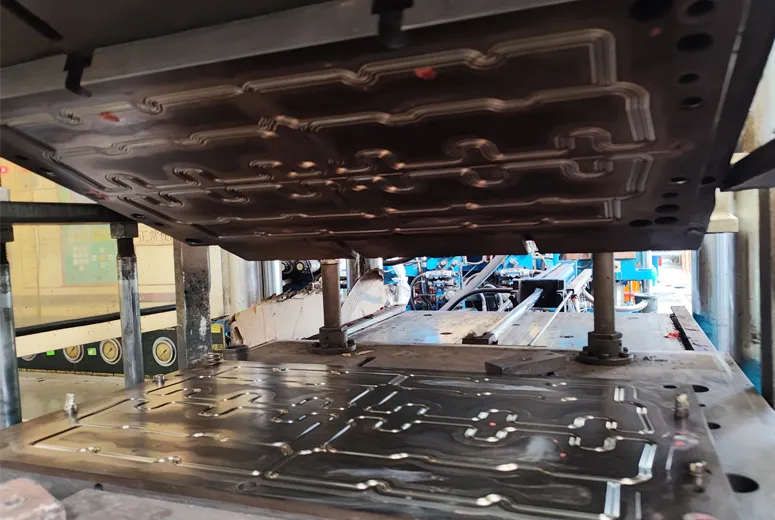
Manufacturing processes for O-rings primarily involve compression molding or injection molding. Compression molding utilizes a closed cavity filled with the rubber compound and subjected to heat and pressure, forcing the material to conform to the mold shape. Injection molding involves injecting molten rubber into a closed mold cavity under high pressure. Key parameters controlled during molding include temperature, pressure, and curing time. Precise control is critical to ensure dimensional accuracy, eliminate voids, and achieve optimal cross-linking for desired mechanical properties. Post-molding processes include deburring to remove flash, and often, a tumbling operation to improve surface finish. Material hardness, typically measured using the Shore A scale, is a critical manufacturing parameter, influencing sealing force and compression set. Compound formulation also dictates properties like tensile strength, elongation at break, and compression set, directly impacting the O-ring's longevity and sealing performance.
Performance & Engineering
The performance of an O-ring in a hydraulic system is governed by several engineering principles. Firstly, the sealing mechanism relies on the O-ring being compressed within a gland, creating an interference fit. The amount of squeeze (compression) is critical; insufficient squeeze results in leakage, while excessive squeeze can lead to increased friction and accelerated wear. Finite Element Analysis (FEA) is frequently employed to optimize gland design and predict stress distribution within the O-ring. Secondly, the fluid compatibility of the O-ring material with the hydraulic fluid is paramount. Incompatibility can cause swelling, softening, or degradation of the elastomer, leading to seal failure. Thirdly, operating temperature significantly affects O-ring performance. High temperatures can reduce the material’s hardness and tensile strength, while low temperatures can increase its stiffness and reduce its elasticity.
Dynamic sealing performance is further complicated by factors like pressure cycling, rod/bore surface finish, and fluid velocity. Pressure cycling induces fatigue in the elastomer, potentially leading to cracking. Surface finish impacts the sealing capability, with rough surfaces increasing the likelihood of leakage. Fluid velocity creates frictional heating, which can accelerate wear and degradation. Compliance requirements, such as those stipulated by SAE standards (e.g., SAE AS568 for standard O-ring sizes), dictate dimensional tolerances, material specifications, and performance testing protocols. Leakage rate testing and burst pressure testing are common validation procedures to ensure O-rings meet specified performance criteria.
Technical Specifications
| Material | Temperature Range (°C) | Fluid Compatibility | Hardness (Shore A) |
|---|---|---|---|
| Nitrile (NBR) | -40 to 120 | Petroleum-based fluids, mineral oils | 70-90 |
| Hydrogenated Nitrile (HNBR) | -30 to 150 | Petroleum-based fluids, mineral oils, ozone | 75-95 |
| Fluorocarbon (FKM/Viton) | -20 to 200 | Wide range, including aggressive chemicals, high temperature oils | 70-90 |
| Ethylene Propylene (EPDM) | -50 to 150 | Water, steam, phosphate ester fluids | 60-80 |
| Silicone (VMQ) | -60 to 230 | Limited to non-petroleum oils, certain chemicals | 50-80 |
| Perfluoroelastomer (FFKM) | -20 to 250 | Virtually all chemicals, extreme temperatures | 60-90 |
Failure Mode & Maintenance
O-rings in hydraulic systems are susceptible to various failure modes. Extrusion failure occurs when the O-ring is forced into the gap between mating components under high pressure, resulting in damage and leakage. This is often mitigated by utilizing backup rings. Compression set, the permanent deformation of the O-ring after prolonged compression, reduces its sealing force and can lead to leakage. Chemical attack occurs when the hydraulic fluid degrades the elastomer, causing swelling, softening, or cracking. Thermal degradation results from prolonged exposure to high temperatures, leading to hardening and embrittlement. Fatigue cracking arises from repeated pressure cycling, initiating cracks within the elastomer. Abrasion is caused by movement between the O-ring and the mating surfaces, particularly in dynamic applications.
Preventative maintenance strategies include regular inspection for signs of wear, swelling, or cracking. Proper lubrication during installation is critical to prevent damage and ensure a proper seal. Selection of the correct O-ring material for the specific hydraulic fluid and operating conditions is paramount. Ensuring proper gland design and surface finish minimizes stress concentration and reduces the risk of extrusion. Regularly monitoring hydraulic fluid cleanliness prevents abrasive wear. Replacement of O-rings should be performed according to a predetermined schedule or when signs of degradation are observed. Proper storage of O-rings is also important, avoiding exposure to ozone, UV light, and extreme temperatures. A rigorous failure analysis process, including visual inspection, material testing, and root cause analysis, is essential for identifying and correcting the underlying causes of O-ring failures.
Industry FAQ
Q: What is the impact of hydraulic fluid contamination on O-ring life?
A: Hydraulic fluid contamination, particularly with abrasive particles, significantly reduces O-ring lifespan. Particles cause abrasion, scoring the O-ring surface and accelerating wear. Chemical contaminants can degrade the elastomer, leading to swelling, softening, or cracking. Maintaining fluid cleanliness through filtration is crucial for maximizing O-ring service life.
Q: How do I select the appropriate O-ring material for phosphate ester hydraulic fluids?
A: Phosphate ester fluids are known for their fire resistance but are incompatible with many common O-ring materials. EPDM is generally the preferred material for phosphate ester fluids due to its excellent resistance. Viton may also be suitable, but long-term compatibility should be verified.
Q: What is the role of backup rings in preventing O-ring extrusion?
A: Backup rings are installed on either side of the O-ring in the gland to prevent the O-ring from being extruded into the gap between mating components under high pressure. They provide additional support and reduce the stress on the O-ring, extending its service life.
Q: What are the best practices for installing O-rings to avoid damage?
A: Proper installation is critical. Lubricate the O-ring with a compatible lubricant before installation. Use specialized O-ring installation tools to avoid nicking or stretching the O-ring. Ensure the gland is clean and free of debris. Avoid using sharp objects during installation. Slowly and carefully roll the O-ring into the gland, avoiding twisting or pinching.
Q: How can I diagnose an O-ring failure in a hydraulic system?
A: Diagnosing an O-ring failure often starts with visual inspection for leakage, swelling, cracking, or abrasion. Performing a pressure test can pinpoint the location of the leak. Analyzing the failed O-ring material can reveal the cause of failure, such as chemical attack or thermal degradation. Consider the operating conditions and fluid compatibility when investigating the failure.
Conclusion
The selection, installation, and maintenance of O-rings in hydraulic systems are critical for ensuring reliable operation and preventing costly downtime. Understanding the material science, manufacturing processes, and failure modes of O-rings is essential for engineers and procurement professionals. Proper material selection based on fluid compatibility, temperature range, and pressure requirements is paramount. Adherence to industry standards and best practices for installation and maintenance significantly extends O-ring service life and minimizes the risk of seal failure.
Future advancements in O-ring technology are likely to focus on developing new materials with improved chemical resistance, temperature stability, and wear characteristics. The integration of smart sensors within O-rings for real-time monitoring of seal health and performance offers potential for predictive maintenance and optimized system reliability. Continued research into advanced gland designs and surface treatments will further enhance O-ring sealing performance and extend their lifespan in demanding hydraulic applications.