

Introduction
Stainless steel tube end caps are critical components utilized across a wide spectrum of industrial applications, including fluid handling systems, structural supports, and hygienic processing environments. Functioning as closures for open-ended stainless steel tubing, these caps provide protection against contamination, maintain system pressure, and enhance structural integrity. Their technical position within the supply chain spans from raw material sourcing (stainless steel alloys) through precision manufacturing processes – encompassing forming, welding, and surface finishing – and ultimately to integration within larger, engineered systems. Core performance characteristics center on corrosion resistance, pressure containment capability, mechanical strength, and dimensional accuracy. The selection of an appropriate end cap is dictated by factors such as the tubing material grade, operating pressure, temperature, fluid compatibility, and applicable industry standards. Addressing the core pain point of maintaining process integrity and minimizing downtime, high-quality end caps are essential for ensuring reliable and safe operation within demanding industrial settings.
Material Science & Manufacturing
The predominant material for stainless steel tube end caps is, unsurprisingly, stainless steel. Specifically, grades 304/304L and 316/316L are most frequently employed due to their superior corrosion resistance and weldability. 304/304L, an austenitic stainless steel, offers excellent resistance to oxidation and many corrosive media, deriving its properties from its chromium content (typically 18-20%). The “L” designation indicates low carbon content, minimizing carbide precipitation during welding, thus preserving corrosion resistance. 316/316L expands upon these characteristics with the addition of molybdenum (2-3%), enhancing resistance to chloride pitting and crevice corrosion, making it suitable for more aggressive environments like marine applications or chemical processing. Raw material sourcing is critical; mill certifications verifying chemical composition and mechanical properties are standard practice.
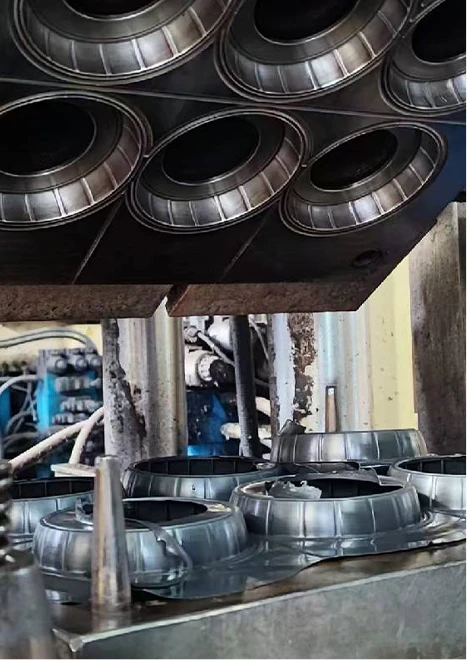
Manufacturing processes vary based on cap geometry and production volume. Common methods include: Hydroforming – a cold-forming process using high-pressure fluid to shape the cap from a flat blank, yielding high dimensional accuracy and minimal material waste. Stamping – suitable for high-volume production of simple cap designs. Welding – often employed for larger diameter caps or those requiring complex geometries. Welding processes like TIG (Tungsten Inert Gas) are preferred for their precise control and high-quality welds. Critical parameters in welding include shielding gas composition (typically argon), welding current, voltage, and travel speed. Post-weld heat treatment (PWHT) may be necessary to relieve residual stresses and optimize corrosion resistance. Machining – utilized for finishing operations to achieve precise dimensions and surface finishes. Surface passivation, a chemical treatment, is crucial for removing iron contaminants and establishing a chromium-rich protective layer, maximizing corrosion resistance. Quality control measures, including dimensional inspections, pressure testing, and material verification, are integral to ensuring product reliability.
Performance & Engineering
The performance of stainless steel tube end caps is governed by several key engineering considerations. Pressure Containment is paramount; caps must withstand the internal pressure of the system without deformation or failure. Calculations based on thin-walled pressure vessel theory (e.g., Barlow's formula) are used to determine the required wall thickness based on material strength, diameter, and operating pressure. A safety factor is applied to account for uncertainties and potential stress concentrations. Mechanical Strength encompasses tensile strength, yield strength, and impact resistance. These properties dictate the cap's ability to withstand external loads, vibrations, and impacts without fracturing. Finite Element Analysis (FEA) is frequently employed to simulate stress distributions and optimize cap design. Corrosion Resistance, as previously mentioned, is critical, and selection of the appropriate stainless steel grade is crucial for the specific operating environment. Electrochemical corrosion mechanisms (pitting, crevice corrosion, galvanic corrosion) must be considered. Fatigue Resistance is relevant in applications involving cyclic loading. Fatigue life is dependent on stress amplitude, material properties, and surface finish. Seal Integrity – when a leak-tight seal is required, the end cap must be designed for proper mating with the tubing and utilize appropriate sealing mechanisms (e.g., O-rings, gaskets, welding). Compliance requirements depend on the industry. For example, pharmaceutical applications require compliance with 3-A Sanitary Standards, while food processing demands adherence to FDA regulations.
Technical Specifications
| Material Grade | Pressure Rating (PSI) | Temperature Range (°C) | Wall Thickness (mm) |
|---|---|---|---|
| 304/304L | 500 | -196 to 370 | 2.0 |
| 316/316L | 750 | -196 to 425 | 2.5 |
| 304/304L | 1000 | -196 to 370 | 3.0 |
| 316/316L | 1250 | -196 to 425 | 3.5 |
| 304/304L | 1500 | -196 to 370 | 4.0 |
| 316/316L | 1750 | -196 to 425 | 4.5 |
Failure Mode & Maintenance
Stainless steel tube end caps, while durable, are susceptible to several failure modes. Corrosion, particularly pitting and crevice corrosion in chloride-containing environments, is a common issue. Improper material selection or inadequate surface passivation can accelerate corrosion. Fatigue Cracking can occur under cyclic loading, especially at stress concentrations near weld seams or geometric discontinuities. Erosion Corrosion, caused by abrasive particles in flowing fluids, can wear away the cap material. Mechanical Damage, from impacts or improper handling, can lead to deformation or fracture. Welding Defects, such as porosity or incomplete fusion, compromise the integrity of welded caps. Galling can occur on threaded connections, seizing the cap and potentially damaging the threads. Preventive maintenance is crucial. Regular visual inspections should be conducted to identify signs of corrosion, cracks, or deformation. Periodic pressure testing can verify the integrity of the cap. Cleaning and passivation treatments can restore the protective chromium oxide layer. For threaded connections, applying anti-seize lubricant prevents galling. In corrosive environments, cathodic protection may be considered. Damaged or corroded caps should be replaced immediately to prevent catastrophic failures and maintain system safety. Proper installation procedures, including correct torque values for threaded connections and qualified welding personnel, are essential for ensuring long-term reliability.
Industry FAQ
Q: What is the impact of weld heat affected zone (HAZ) on the corrosion resistance of a welded stainless steel end cap?
A: The HAZ is the area surrounding a weld that experiences temperature changes altering the microstructure. This can lead to sensitization, where chromium carbides precipitate at grain boundaries, depleting chromium locally and reducing corrosion resistance. Utilizing low-carbon grades (304L, 316L), controlling welding parameters to minimize heat input, and employing post-weld heat treatment (PWHT) can mitigate sensitization and restore corrosion resistance.
Q: How do you determine the appropriate wall thickness for a stainless steel end cap based on internal pressure?
A: Wall thickness is calculated using thin-walled pressure vessel theory, considering the material's yield strength, the cap's inner diameter, and the design pressure. Barlow's formula (t = (P D) / (2 S E - 0.6 P)) is often used, where 't' is wall thickness, 'P' is pressure, 'D' is diameter, 'S' is allowable stress, and 'E' is joint efficiency. A safety factor is applied to 'S' to account for uncertainties.
Q: Can stainless steel end caps be used with dissimilar metals in a piping system, and what precautions should be taken?
A: Yes, but galvanic corrosion must be considered. Connecting stainless steel to less noble metals (e.g., carbon steel) creates a galvanic cell, accelerating corrosion of the less noble metal. Mitigation strategies include using dielectric unions to isolate the metals, applying protective coatings, or selecting a stainless steel grade with a more similar electrochemical potential to the other metal.
Q: What is the role of surface passivation in enhancing the performance of stainless steel end caps?
A: Surface passivation removes free iron and other contaminants from the surface, promoting the formation of a stable, chromium-rich oxide layer. This passive layer provides exceptional corrosion resistance by acting as a barrier between the metal and the environment. It's crucial after machining or welding where the passive layer might be disrupted.
Q: What are the key considerations when selecting a stainless steel end cap for a sanitary application (e.g., food or pharmaceutical processing)?
A: Sanitary applications require smooth, crevice-free surfaces to prevent bacterial adhesion and facilitate cleaning. 316L stainless steel is preferred for its superior corrosion resistance. End caps must comply with 3-A Sanitary Standards or equivalent regulations. Polished finishes (e.g., Ra < 0.8 μm) and hygienic clamp connections are typical features.
Conclusion
Stainless steel tube end caps represent a fundamental component in numerous industrial systems, providing critical functionality in maintaining fluid integrity, structural support, and process safety. The optimal selection and application of these caps depend on a thorough understanding of material science principles, manufacturing processes, and relevant engineering considerations. The choice of stainless steel grade (304/304L or 316/316L) is dictated by the operating environment and corrosion requirements, while manufacturing techniques like hydroforming and welding demand precise parameter control to ensure structural integrity and long-term performance.
Future advancements in end cap technology will likely focus on enhanced corrosion resistance through novel alloy compositions and surface treatments, improved sealing mechanisms for leak-proof performance, and the integration of smart sensors for real-time monitoring of cap condition. Careful attention to installation procedures, regular maintenance, and adherence to industry standards are essential for maximizing the service life and reliability of stainless steel tube end caps, ultimately minimizing downtime and ensuring the safe and efficient operation of critical industrial processes.