
Introduction
Aluminum washers are critical fastening components utilized across diverse industries including aerospace, automotive, electronics, and construction. Positioned within the mechanical fastening supply chain, washers serve to distribute load, prevent damage to the joined material, provide consistent clamping force, and act as spacers. These seemingly simple components are engineered from a variety of aluminum alloys, each possessing distinct mechanical and chemical properties tailored to specific application requirements. Core performance characteristics center around load distribution capability, corrosion resistance, electrical conductivity (depending on alloy), and dimensional stability under varying environmental conditions. The selection of an appropriate aluminum washer necessitates a detailed understanding of the applied load, operating environment, and material compatibility considerations.
Material Science & Manufacturing
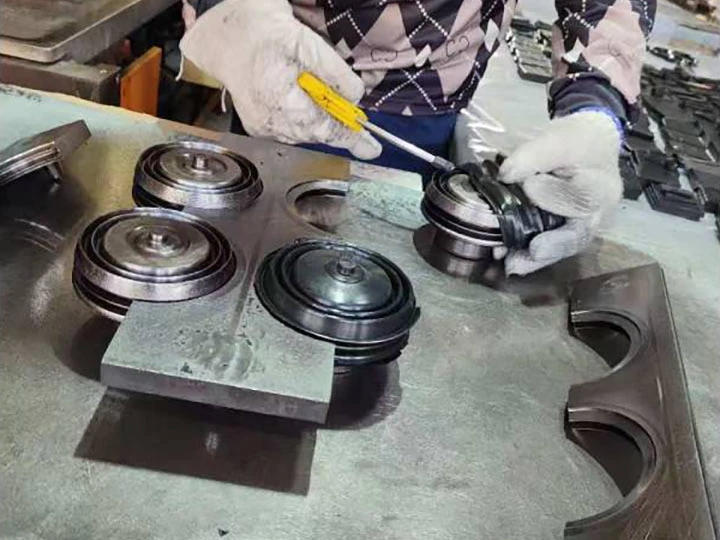
Aluminum washers are commonly manufactured from alloys in the 1100, 3003, 5052, and 6061 series. 1100 aluminum, known for its high purity, exhibits excellent corrosion resistance and formability, but possesses relatively low mechanical strength. 3003 alloy offers improved strength while maintaining good workability and weldability, often utilized for general-purpose applications. 5052 alloy provides superior corrosion resistance, particularly in marine environments, along with higher strength than 3003. 6061 aluminum, a heat-treatable alloy, achieves the highest strength levels amongst these commonly used grades, making it suitable for structural applications. The physical properties are influenced by alloy composition, heat treatment (for heat-treatable alloys), and cold working. For example, tensile strength can range from approximately 90 MPa for 1100-O to over 310 MPa for 6061-T6. Manufacturing processes include stamping from aluminum sheet or strip, CNC machining from solid stock, and occasionally, forging for high-strength applications. Stamping is the most cost-effective method for large volume production. Critical parameters during stamping include die design to ensure proper material flow and prevent cracking, as well as lubrication to reduce friction and tool wear. CNC machining offers greater dimensional accuracy and the capability to produce washers with complex geometries, but at a higher cost. Precise tool path programming and coolant management are essential for achieving tight tolerances. Surface finish, achieved through techniques like anodizing or passivation, is crucial for enhancing corrosion resistance and providing a protective layer.
Performance & Engineering
The performance of aluminum washers is dictated by several engineering considerations. Force analysis is paramount; washers must withstand the clamping force applied by the fastener without deformation or failure. This requires calculation of stress distribution within the washer, considering factors such as washer dimensions, material properties, and the applied load. Finite Element Analysis (FEA) is frequently employed to optimize washer design and predict stress concentrations. Environmental resistance is another critical factor. Aluminum is susceptible to corrosion, particularly in the presence of chlorides. Anodizing, a common surface treatment, creates a protective oxide layer, significantly enhancing corrosion resistance. Galvanic corrosion can occur when aluminum washers are used in conjunction with dissimilar metals; proper isolation techniques, such as insulating washers or coatings, are necessary to mitigate this risk. Compliance requirements vary by industry. In aerospace, washers must meet stringent standards outlined in AMS (Aerospace Material Specifications) and FAA regulations. Automotive applications require compliance with IATF 16949 quality management system standards. Electrical conductivity is an important performance characteristic in applications requiring grounding or shielding; specific aluminum alloys are selected based on their conductivity values. Dimensional stability, influenced by temperature fluctuations and mechanical stress, is crucial for maintaining consistent clamping force over the washer’s service life.
Technical Specifications
| Alloy | Tensile Strength (MPa) | Hardness (Brinell) | Corrosion Resistance | Typical Applications |
|---|---|---|---|---|
| 1100-O | 90 | 25 | Excellent | Chemical Processing Equipment, Decorative Trim |
| 3003-H14 | 170 | 55 | Good | General Purpose Washers, Roofing |
| 5052-H32 | 230 | 85 | Very Good (Marine) | Marine Hardware, Fuel Tanks |
| 6061-T6 | 310 | 140 | Good (with Anodizing) | Aircraft Structures, Automotive Components |
| 2024-T3 | 460 | 150 | Fair (Requires Protective Coating) | Aircraft Structural Parts, High-Strength Applications |
| 7075-T6 | 570 | 150 | Fair (Requires Protective Coating) | High-Stress Applications, Aerospace Components |
Failure Mode & Maintenance
Aluminum washers can fail through several mechanisms. Fatigue cracking, particularly under cyclic loading, is a common failure mode. This often initiates at stress concentrations, such as holes or edges. Creep, the slow deformation under sustained load, can occur at elevated temperatures. Galvanic corrosion, as previously mentioned, can lead to localized corrosion and eventual washer failure. Pitting corrosion, caused by chloride ions, can create small holes on the washer surface, reducing its load-bearing capacity. Oxidation, although forming a protective layer in many cases, can lead to surface degradation over extended periods, especially in harsh environments. Delamination can occur in coated washers if the coating loses adhesion. Maintenance typically involves visual inspection for signs of corrosion, cracking, or deformation. Regular cleaning to remove contaminants can help prevent corrosion. The application of protective coatings, such as lubricants or corrosion inhibitors, can extend washer service life. For critical applications, periodic non-destructive testing (NDT) methods, such as dye penetrant inspection or ultrasonic testing, can detect hidden cracks or defects. Replacement of damaged or corroded washers is crucial to ensure the integrity of the fastening system. Proper torqueing of fasteners is essential to prevent overstressing the washer and leading to premature failure.
Industry FAQ
Q: What is the impact of washer thickness on clamping force distribution?
A: Washer thickness directly influences the distribution of clamping force. Thicker washers distribute the load over a larger area, reducing stress concentration on the joined materials. However, excessive thickness can lead to reduced bolt elongation, potentially affecting the integrity of the joint. Optimizing washer thickness requires balancing load distribution with bolt performance.
Q: How does heat treatment affect the mechanical properties of aluminum washers?
A: Heat treatment, particularly for alloys like 6061, significantly enhances mechanical properties. Temper designations like T6 indicate a solution heat treatment and artificial aging process, resulting in increased tensile strength and yield strength. However, heat treatment can also reduce ductility and corrosion resistance in some cases.
Q: What are the considerations when using aluminum washers with steel fasteners?
A: Galvanic corrosion is a primary concern when using aluminum washers with steel fasteners. The difference in electrochemical potential between the two metals can lead to accelerated corrosion of the aluminum washer. Mitigation strategies include using insulating washers, applying a barrier coating to the aluminum washer, or selecting a compatible alloy pair.
Q: What is the role of anodizing in enhancing the performance of aluminum washers?
A: Anodizing creates a protective oxide layer on the aluminum surface, significantly improving corrosion resistance, wear resistance, and surface hardness. The anodized layer also provides a good base for paint or other coatings. The thickness of the anodized layer can be tailored to specific application requirements.
Q: How do different aluminum alloys compare in terms of electrical conductivity for grounding applications?
A: 1100 aluminum exhibits the highest electrical conductivity among the commonly used alloys, making it the preferred choice for grounding applications where minimizing electrical resistance is critical. 3003 and 5052 offer good conductivity, while 6061 and heat-treated alloys have lower conductivity due to the presence of alloying elements.
Conclusion
Aluminum washers are essential components in a multitude of engineering applications, offering a beneficial combination of lightweight, corrosion resistance, and cost-effectiveness. The selection of the appropriate aluminum alloy and manufacturing process is paramount to ensuring optimal performance and longevity. Understanding the failure modes and implementing preventative maintenance strategies are critical for maximizing service life and maintaining the integrity of fastened joints.
Future development in aluminum washer technology will likely focus on advanced surface treatments to further enhance corrosion resistance and wear resistance, as well as the development of new alloys with improved mechanical properties and formability. Moreover, the increasing adoption of digital manufacturing techniques, such as additive manufacturing, may enable the production of complex washer geometries tailored to specific application demands, optimizing load distribution and reducing material waste.