
Introduction
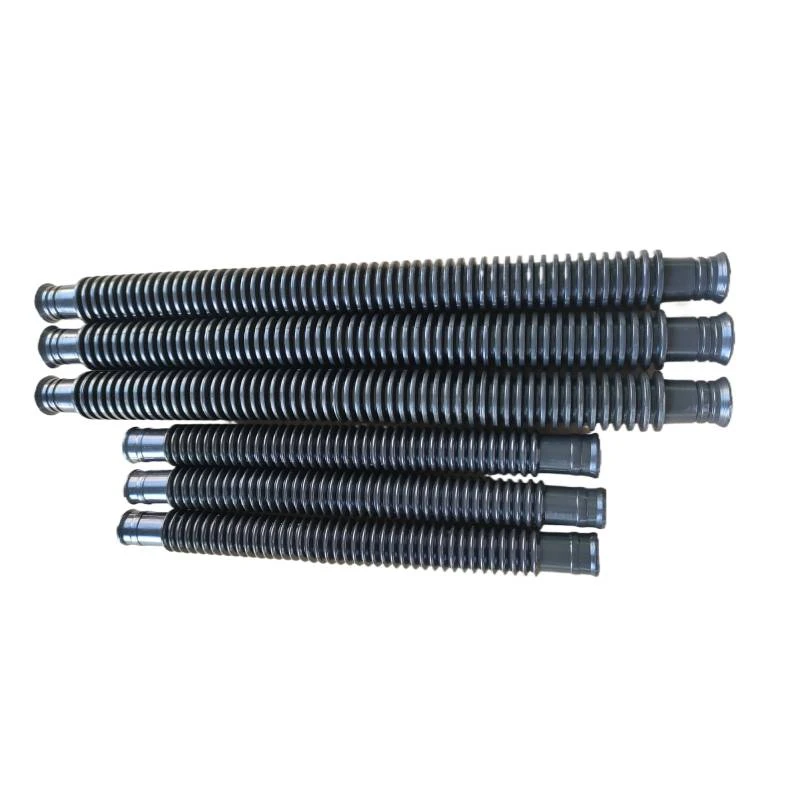
12-inch corrugated plastic pipe (CPP) is a widely utilized conduit system primarily employed in subsurface drainage, storm water management, and sewage applications. Positioned within the broader infrastructure supply chain, it represents a cost-effective alternative to traditional materials like concrete or metallic piping. Its core performance characteristics revolve around high flow capacity, lightweight construction facilitating ease of installation, and inherent corrosion resistance. The material composition, typically high-density polyethylene (HDPE) or polypropylene (PP), dictates its mechanical strength, durability, and operational temperature range. A significant pain point within the industry stems from ensuring long-term structural integrity under varying soil conditions and load stresses. Furthermore, consistent adherence to evolving environmental regulations regarding material leachates and recyclability remains a critical concern for manufacturers and end-users alike. Understanding the nuanced interplay between material properties, installation practices, and environmental factors is paramount for optimal performance and longevity of 12-inch CPP systems.
Material Science & Manufacturing
The primary raw material for 12-inch corrugated plastic pipe is typically HDPE or PP, chosen for their balance of cost, flexibility, and chemical resistance. HDPE exhibits a semi-crystalline structure, providing excellent tensile strength and impact resistance, especially at lower temperatures. PP, while slightly less flexible, offers superior temperature resistance. Both polymers are derived from the cracking of crude oil. The manufacturing process generally involves extrusion. Resin pellets are fed into an extruder where they are heated and forced through a die to create a continuous sheet. This sheet is then corrugated using a series of rollers, forming the characteristic ribbed structure. Critical parameters during extrusion include melt temperature, die pressure, and cooling rate – deviations significantly impact wall thickness uniformity and mechanical properties. The corrugations are not merely structural; they enhance the pipe’s bending length and ring stiffness. Post-extrusion, the corrugated sheet is formed into a circular profile and secured with a longitudinal seam, often through thermal welding or adhesive bonding. Quality control at this stage focuses on seam integrity and dimensional accuracy. The addition of UV stabilizers and antioxidants is crucial to prevent degradation from prolonged sunlight exposure and maintain long-term durability. Chemical compatibility with surrounding soil and transported fluids is also assessed during material selection. For example, prolonged exposure to certain solvents or aggressive chemicals can cause polymer swelling or cracking, compromising the pipe’s structural integrity.
Performance & Engineering
The performance of 12-inch corrugated plastic pipe is heavily influenced by its structural capacity to withstand external loads and maintain hydraulic functionality. Key engineering considerations include soil loading (vertical pressure from overburden), live loading (traffic or construction equipment), and hydrostatic pressure (internal fluid pressure). Ring stiffness, a measure of the pipe’s resistance to flattening, is a critical parameter, typically determined through ASTM D2412 testing. The pipe’s ability to distribute loads is directly related to its burial depth and the surrounding soil’s properties (compaction, moisture content, and grain size distribution). Force analysis utilizes principles of soil mechanics and structural engineering to predict pipe deflection under load. Deflection exceeding acceptable limits can lead to joint separation, reduced flow capacity, and eventual failure. Environmental resistance is another crucial aspect. CPP is generally resistant to most common soil chemicals, but prolonged exposure to acids or bases can cause degradation. Temperature variations also affect performance; HDPE becomes more brittle at low temperatures, while excessive heat can reduce its stiffness. Compliance with local and national regulations governing stormwater management and wastewater conveyance is paramount. These regulations often specify minimum pipe stiffness requirements, allowable deflection limits, and material certification standards. Proper installation practices, including adequate bedding and backfill compaction, are essential to ensure long-term performance and prevent premature failure.
Technical Specifications
| Parameter | HDPE (Typical) | PP (Typical) | Units |
|---|---|---|---|
| Nominal Diameter | 12 | 12 | inches |
| Ring Stiffness | 45 | 55 | psi |
| Tensile Strength | 4,000 | 3,500 | psi |
| Impact Resistance (Izod Notched) | 15 | 10 | ft-lb/in |
| Operating Temperature Range | -40 to 180 | -20 to 212 | °F |
| Longitudinal Seam Strength | >90% of Pipe Strength | >90% of Pipe Strength | % |
Failure Mode & Maintenance
Failure modes in 12-inch corrugated plastic pipe systems are diverse and often interconnected. Common failure mechanisms include ovalization (deformation due to external load), cracking (caused by stress concentrations or material defects), joint separation (resulting from improper installation or soil settlement), and degradation (due to UV exposure or chemical attack). Fatigue cracking can occur under cyclical loading conditions, particularly in areas around corrugation peaks. Delamination, a separation of layers within the pipe wall, can be initiated by impact damage or prolonged exposure to aggressive chemicals. Oxidation, particularly in PP, can lead to embrittlement and reduced strength. Corrosion, while not typical for the plastic itself, can occur in metallic fittings or couplings used in the system. Preventative maintenance involves regular visual inspections to identify signs of damage, such as cracks, deformation, or joint misalignment. Corrective measures include repairing minor cracks with appropriate patching compounds, replacing damaged sections of pipe, and ensuring proper bedding and backfill compaction. For systems exposed to UV radiation, periodic application of UV-protective coatings can extend service life. Maintaining proper drainage and preventing the accumulation of debris within the pipe is crucial to prevent hydraulic overload and potential damage. A proactive inspection and maintenance program, coupled with adherence to proper installation practices, can significantly extend the service life of a 12-inch CPP system and minimize the risk of costly failures.
Industry FAQ
Q: What is the impact of soil corrosivity on the lifespan of HDPE corrugated pipe?
A: While HDPE itself is highly resistant to most soil chemicals, corrosive soils containing high levels of sulfates or chlorides can accelerate degradation of any associated metallic components, such as fittings or connections. Furthermore, extreme pH levels can potentially affect the long-term durability of the HDPE. A thorough soil analysis is recommended prior to installation to assess corrosivity and select appropriate materials for the entire system.
Q: How does burial depth affect the load-bearing capacity of corrugated pipe?
A: Increased burial depth generally increases the load-bearing capacity of the pipe, as the overburden provides greater support and distributes the load more evenly. However, excessive burial depth can also increase hydrostatic pressure and potentially lead to ovalization. Proper design calculations, considering soil properties, traffic loads, and pipe stiffness, are essential to determine the optimal burial depth.
Q: What are the key differences between HDPE and PP corrugated pipe in terms of long-term performance?
A: HDPE generally offers superior impact resistance, particularly at lower temperatures, making it more suitable for applications in colder climates or areas prone to rock or debris impact. PP exhibits better temperature resistance and stiffness at elevated temperatures. The choice between the two materials depends on the specific application requirements and environmental conditions.
Q: What is the acceptable level of deflection for a 12-inch corrugated pipe under a typical highway load?
A: Acceptable deflection limits vary depending on local regulations and design standards, but generally, deflection should not exceed 5% of the pipe diameter. Excessive deflection can lead to joint separation, reduced flow capacity, and eventual failure. Regular monitoring of deflection during and after installation is recommended.
Q: How important is proper compaction of backfill material during installation?
A: Proper compaction of backfill material is absolutely critical. Inadequate compaction can lead to uneven support, increased stress on the pipe, and premature failure. Compaction should be performed in layers, using appropriate equipment, to achieve the specified density requirements. The type of backfill material also plays a role; granular materials generally provide better support than cohesive soils.
Conclusion
12-inch corrugated plastic pipe represents a robust and cost-effective solution for a wide range of drainage and conveyance applications. Its performance is inextricably linked to careful material selection, precise manufacturing control, and adherence to sound engineering principles. Understanding the potential failure modes – encompassing mechanical stress, environmental degradation, and improper installation – is crucial for ensuring long-term reliability. The ongoing development of advanced polymer formulations and improved installation techniques will continue to enhance the durability and sustainability of these systems.
Future advancements will likely focus on incorporating recycled materials into CPP production, reducing environmental impact and promoting circular economy principles. Further research into innovative jointing methods and improved bedding materials will contribute to enhanced structural performance and reduced maintenance requirements. Continuous monitoring of field performance and implementation of data-driven design improvements will be essential for optimizing the life cycle cost and maximizing the benefits of 12-inch corrugated plastic pipe systems.