
Introduction
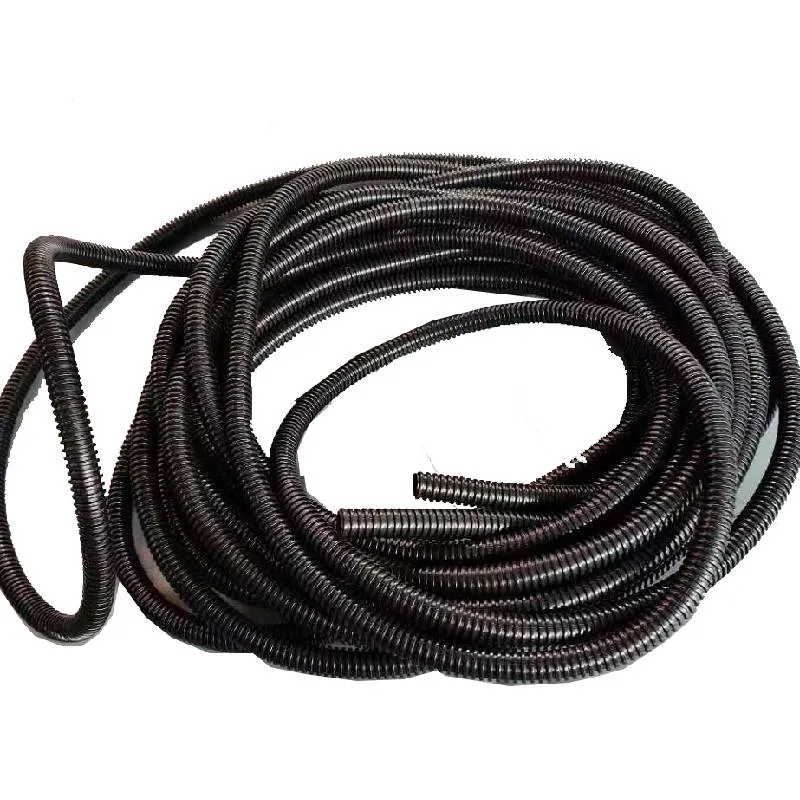
16 inch corrugated plastic pipe (CPP), typically constructed from polyethylene (PE) or polypropylene (PP), represents a critical component in modern drainage and conveyance systems. Its position within the industrial chain lies between the raw polymer production and on-site infrastructure installation, serving as a cost-effective and lightweight alternative to traditional materials like concrete or metal. CPP is predominantly used in stormwater management, agricultural drainage, septic systems, and non-pressure sewer applications. Core performance characteristics center around its high ring stiffness, flexibility allowing for installation in difficult terrains, and resistance to corrosion, all contributing to a long service life with minimal maintenance. A key industry pain point is ensuring long-term structural integrity under varying soil loads and environmental conditions, alongside achieving consistent product quality across different manufacturers. The demand for sustainable drainage solutions further emphasizes the importance of CPP's recyclability and reduced environmental impact compared to concrete alternatives.
Material Science & Manufacturing
The foundational material for 16 inch CPP is predominantly high-density polyethylene (HDPE) – chosen for its exceptional tensile strength, chemical resistance, and low-temperature ductility – or polypropylene (PP), offering good rigidity and cost-effectiveness. HDPE exhibits a semi-crystalline structure, influencing its mechanical properties. Molecular weight distribution within the HDPE resin significantly impacts processability and final product durability. Manufacturing typically involves extrusion. The process begins with the melting of plastic resin. This molten plastic is then forced through a die which creates the corrugated profile. Key parameters in extrusion include die temperature (typically 180-220°C for HDPE), screw speed (controlling output rate), and cooling rate (affecting crystallinity). Post-extrusion, the pipe undergoes sizing and cutting. Ring stiffness, a critical performance parameter, is controlled by the corrugated profile geometry—the height and pitch of the corrugations. Variations in these dimensions directly impact the pipe’s ability to withstand external loads. Chemical compatibility is crucial; CPP exhibits excellent resistance to most acids, bases, and salts commonly found in soil and wastewater, however, prolonged exposure to strong oxidizing agents should be avoided. The raw materials must meet stringent purity standards (ASTM D3350 for HDPE) to minimize degradation during processing and ensure long-term performance.
Performance & Engineering
The performance of 16 inch CPP is heavily governed by its structural integrity under load. Soil load analysis, typically employing Boussinesq or Westergaard equations, determines the external pressure exerted on the pipe. Ring stiffness, measured in pounds per inch (psi), is the primary indicator of a pipe’s resistance to collapse. Force analysis incorporates factors such as pipe burial depth, soil type (sand, clay, gravel), and groundwater table. Environmental resistance is another crucial consideration. UV exposure can lead to polymer degradation, necessitating the incorporation of UV stabilizers (carbon black is commonly used). Temperature fluctuations induce expansion and contraction; design must accommodate these thermal movements to prevent stress cracking. Compliance requirements are dictated by regional regulations and application-specific standards (e.g., ASTM F894 for corrugated polyethylene pipe for septic applications). Functional implementation often involves considerations for jointing methods – couplers are commonly used, requiring proper installation techniques to maintain watertight seals. Long-term creep, the gradual deformation under sustained load, is a key design consideration. Accelerated aging tests are performed to predict creep behavior and ensure the pipe maintains adequate structural capacity over its intended service life. Furthermore, the pipe's hydraulic capacity, determined by Manning’s equation, must be adequate for the anticipated flow rates.
Technical Specifications
| Parameter | HDPE (Typical) | PP (Typical) | Units |
|---|---|---|---|
| Nominal Diameter | 16 | 16 | inches |
| Ring Stiffness | 45-60 | 35-50 | psi |
| Tensile Strength | 4000-5000 | 3000-4000 | psi |
| Impact Strength (Izod Notched) | 8-12 | 5-8 | ft-lb/in |
| Operating Temperature Range | -40 to 180 | -20 to 190 | °F |
| Specific Gravity | 0.94-0.96 | 0.90-0.92 | - |
Failure Mode & Maintenance
Failure modes in 16 inch CPP can be categorized as mechanical, chemical, and environmental. Mechanical failures include fatigue cracking due to repeated loading (e.g., from traffic), impact damage from accidental excavation, and collapse under excessive soil load. Fatigue cracking initiates at stress concentrators (e.g., corrugated peaks) and propagates through the pipe wall. Chemical failures are less common but can occur due to exposure to aggressive chemicals in the surrounding soil or wastewater, leading to polymer degradation and embrittlement. Environmental degradation manifests as UV-induced embrittlement (especially in exposed sections) and oxidative degradation. Oxidation is accelerated by elevated temperatures and the presence of metal ions. Proper installation is critical to mitigate failures. Backfilling material should be properly compacted in layers to provide uniform support and avoid localized stress concentrations. Maintenance primarily involves visual inspection for cracks, deformation, or joint separation. Blockages can be cleared using mechanical means (e.g., rodding) or high-pressure water jetting. For significant damage, sections of pipe can be replaced using appropriate couplers. Preventative maintenance includes ensuring proper drainage to minimize soil saturation and reduce hydrostatic pressure on the pipe. Regular inspection of exposed sections for UV damage is also recommended. Long-term monitoring of settlement and deflection can provide early warning signs of potential structural issues. If corrosion is suspected, material testing should be conducted to determine the extent of degradation.
Industry FAQ
Q: What is the optimal backfill material for 16 inch corrugated pipe to maximize its lifespan?
A: The optimal backfill material is granular, free-draining material like sand or gravel. These materials provide uniform support, minimize hydrostatic pressure, and allow for efficient drainage. Avoid using clay-rich soils as they retain water, increasing the load on the pipe and potentially leading to settlement or collapse. Compaction should be performed in maximum 6-inch layers to avoid over-compaction and stress concentration.
Q: How does the corrugated profile affect the pipe’s performance under load?
A: The corrugated profile significantly enhances the pipe’s ring stiffness, providing resistance to collapse under external loads. The height and pitch of the corrugations are critical design parameters. A taller corrugation generally increases ring stiffness, but also increases the potential for stress concentration. The profile geometry is optimized based on the anticipated load conditions and soil type.
Q: What are the common causes of joint failure in corrugated plastic pipe systems?
A: Common causes include improper installation, insufficient compaction around the joint, misalignment of pipe sections, and the use of incompatible couplers. It’s essential to follow the manufacturer’s recommendations for joint assembly and ensure that couplers are securely fastened. Also, ensure the joint is free from debris before connection.
Q: How do I determine the appropriate ring stiffness for a specific application?
A: Ring stiffness selection depends on the burial depth, soil type, and anticipated traffic loads. A geotechnical investigation is crucial to determine the soil properties and load conditions. Design charts and software tools are available to calculate the required ring stiffness based on these parameters. Consult relevant standards (e.g., ASTM F894) for guidance.
Q: What is the impact of UV exposure on the long-term performance of corrugated plastic pipe?
A: Prolonged UV exposure can lead to polymer degradation, resulting in embrittlement and reduced mechanical properties. Adding UV stabilizers (like carbon black) to the plastic resin mitigates this effect. For exposed sections of pipe, consider using UV-resistant coatings or providing shielding to minimize exposure.
Conclusion
16 inch corrugated plastic pipe offers a compelling solution for various drainage and conveyance applications due to its lightweight nature, cost-effectiveness, and corrosion resistance. However, ensuring long-term performance necessitates a thorough understanding of the material science, manufacturing processes, and engineering principles governing its behavior under load and environmental conditions. Proper material selection (HDPE vs. PP), optimized corrugated profile design, and meticulous installation practices are all crucial to prevent premature failure and maximize service life.
Future development trends focus on enhancing the sustainability of CPP through increased utilization of recycled materials and bio-based polymers. Advancements in non-destructive testing (NDT) methods will enable more accurate assessment of pipe integrity and proactive maintenance planning. Further research into advanced polymer formulations and UV stabilization techniques will extend the service life of CPP in harsh environmental conditions, solidifying its role as a vital infrastructure component.