
Introduction
18-inch corrugated plastic pipe (CPP) represents a significant advancement in subsurface drainage and conveyance systems. Primarily manufactured from polyethylene (PE) or polypropylene (PP), its corrugated structure provides a superior ring stiffness-to-weight ratio compared to traditional smooth-walled piping. This characteristic is particularly vital in applications requiring load bearing capabilities, such as storm water management, agricultural drainage, and wastewater infrastructure. CPP has largely superseded materials like concrete and corrugated metal pipe in numerous applications due to its lighter weight, ease of installation, inherent corrosion resistance, and cost-effectiveness. The ‘18-inch’ designation refers to the nominal inside diameter, a critical specification influencing flow capacity and application suitability. This guide will detail the material science, manufacturing processes, performance characteristics, potential failure modes, and relevant industry standards pertaining to 18-inch corrugated plastic pipe.
Material Science & Manufacturing
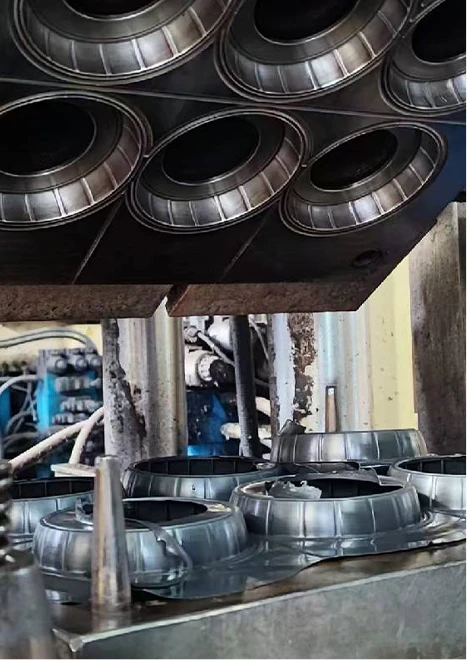
The predominant materials used in 18-inch CPP are High-Density Polyethylene (HDPE) and Polypropylene (PP). HDPE offers excellent impact resistance, particularly at lower temperatures, and superior chemical inertness. Its crystalline structure contributes to higher tensile strength. PP, conversely, presents higher stiffness and temperature resistance, although it can be more susceptible to environmental stress cracking. The raw material typically arrives in pellet form. Manufacturing begins with extrusion. The plastic pellets are fed into an extruder, where they are heated and melted. This molten plastic is then formed into a corrugated shape using a series of precisely engineered rollers or dies. The corrugation profile (e.g., circular, spiral-wound) dictates the pipe’s ring stiffness. Following corrugation, the plastic is cooled and sized. Key parameters during extrusion include melt temperature (typically 180-240°C for HDPE/PP), extrusion speed, and cooling rate. Precise control of these parameters is crucial to ensure consistent wall thickness, corrugation geometry, and overall pipe integrity. For larger diameter pipes like 18-inch CPP, a split die is frequently employed to facilitate the shaping of the corrugated profile. Post-extrusion, quality control checks include dimensional accuracy, visual inspection for defects, and hydrostatic pressure testing to verify structural integrity. The addition of UV stabilizers during the extrusion process is common to enhance long-term resistance to degradation from sunlight exposure.
Performance & Engineering
The performance of 18-inch CPP is dictated by several key engineering considerations. Hydrostatic pressure resistance is paramount, determined by the pipe’s wall thickness, corrugation profile, and material properties. This resistance is critical for burial depths and load-bearing applications. Ring stiffness, measured in psi, quantifies the pipe’s ability to resist flattening under external loads, such as soil overburden and traffic. The Manning’s equation is used to calculate flow capacity, factoring in pipe diameter, slope, and roughness coefficient (typically 0.012 for plastic pipes). Soil-structure interaction must be considered during installation. Proper bedding and backfill compaction are essential to distribute loads evenly and prevent pipe deformation. Long-term creep performance, the gradual deformation under sustained load, is a significant concern. HDPE exhibits a relatively low creep rate compared to other thermoplastics. Environmental resistance, particularly to chemical exposure and UV degradation, is also crucial. CPP is generally resistant to most common soil chemicals, but prolonged exposure to strong acids or solvents should be avoided. Joint integrity is another critical aspect of performance. Couplings, typically utilizing a bell-and-spigot or split-ring design with gasket seals, must maintain a watertight connection under pressure and during thermal expansion/contraction. Fatigue analysis is vital in applications with cyclic loading, such as railway crossings or heavily trafficked areas.
Technical Specifications
| Parameter | HDPE CPP (Typical) | PP CPP (Typical) | ASTM Standard |
|---|---|---|---|
| Nominal Diameter (in) | 18 | 18 | F405 |
| Minimum Ring Stiffness (psi) | 48 | 55 | D2412 |
| Wall Thickness (in) | 0.075 | 0.085 | F405 |
| Tensile Strength (psi) | 4,000 | 6,000 | D638 |
| Impact Resistance (ft-lb) | 10 | 8 | D2561 |
| Hydrostatic Design Stress (psi) | 1,600 | 2,000 | F405 |
Failure Mode & Maintenance
Several failure modes can affect 18-inch corrugated plastic pipe. Ovalization, the deformation of the pipe cross-section, can occur due to inadequate bedding, excessive external loads, or creep. Cracking, particularly stress cracking or environmental stress cracking (ESC), can initiate at stress concentrations (e.g., couplings, punctures) and propagate over time, especially with exposure to certain chemicals. Joint failure, manifesting as leakage, can arise from gasket degradation, improper installation, or ground movement. Long-term UV degradation can embrittle the plastic, reducing its impact resistance and increasing its susceptibility to cracking. Blockage due to sediment buildup or root intrusion is a common issue, reducing flow capacity and potentially leading to surcharge. Maintenance typically involves periodic inspection for signs of deformation, cracking, or leakage. Cleaning to remove sediment buildup can be performed mechanically or hydraulically. Root intrusion can be addressed with herbicide treatments or mechanical removal. For significant damage or structural compromise, pipe replacement is often the most practical solution. Regular visual inspection and prompt attention to minor issues can significantly extend the service life of the CPP system. Proper installation, adhering to manufacturer recommendations and industry best practices, is the most effective preventative maintenance measure.
Industry FAQ
Q: What is the difference between SDR (Standard Dimension Ratio) and ring stiffness, and which is more important for 18-inch CPP?
A: SDR is a ratio of pipe diameter to wall thickness, often used for pressure piping. Ring stiffness, however, directly measures the pipe’s resistance to flattening under external loads, which is the primary concern for buried applications like those using 18-inch CPP. While SDR provides some indication of strength, ring stiffness is the more critical parameter for CPP design and selection because it directly relates to load-bearing capacity and long-term performance under soil overburden.
Q: How does soil corrosivity affect the long-term performance of HDPE CPP?
A: HDPE is inherently corrosion-resistant. However, highly acidic or alkaline soils can accelerate degradation over extended periods. The primary concern isn’t corrosion of the HDPE itself, but rather the potential for chemical attack on the gasket materials used in the couplings. A thorough soil analysis is recommended to determine the pH and chemical composition, and appropriate gasket materials should be selected accordingly.
Q: What bedding and backfill materials are recommended for 18-inch CPP installation?
A: Granular materials, such as sand, gravel, or crushed stone, are generally recommended for bedding and backfill. These materials provide adequate support and promote proper drainage. Avoid using clay or organic materials, as they can retain moisture, exert excessive pressure on the pipe, and promote corrosion. Compaction should be performed in lifts to achieve optimal density without overstressing the pipe.
Q: What is the typical service life of a properly installed 18-inch HDPE CPP system?
A: With proper installation and under normal operating conditions, a properly installed 18-inch HDPE CPP system can have a service life of 50 years or more. However, this is dependent on factors such as soil conditions, loading, and exposure to UV radiation. Regular inspection and maintenance can further extend the service life.
Q: Are there any considerations for installing 18-inch CPP in areas prone to frost heave?
A: Frost heave is a significant concern. Removing organic material below the pipe and ensuring adequate drainage are critical. Using a well-compacted, non-frost-susceptible backfill material is also essential. In severe cases, geofabric layers may be necessary to mitigate frost heave effects.
Conclusion
18-inch corrugated plastic pipe offers a robust and cost-effective solution for a wide range of drainage and conveyance applications. Its combination of lightweight construction, high ring stiffness, and inherent corrosion resistance makes it a superior alternative to traditional materials like concrete and metal. However, successful implementation hinges on a thorough understanding of the material science, manufacturing processes, and relevant engineering principles. Proper installation practices, including appropriate bedding, backfill compaction, and joint sealing, are paramount to ensuring long-term performance and maximizing the service life of the system.
Looking forward, advancements in CPP technology will likely focus on developing enhanced materials with improved creep resistance, UV stability, and impact strength. Increased adoption of digital monitoring systems for real-time performance assessment and predictive maintenance will also become more prevalent, further optimizing the efficiency and reliability of these critical infrastructure components. Continued adherence to industry standards and best practices remains crucial for ensuring the safe and sustainable use of 18-inch corrugated plastic pipe.