
Introduction
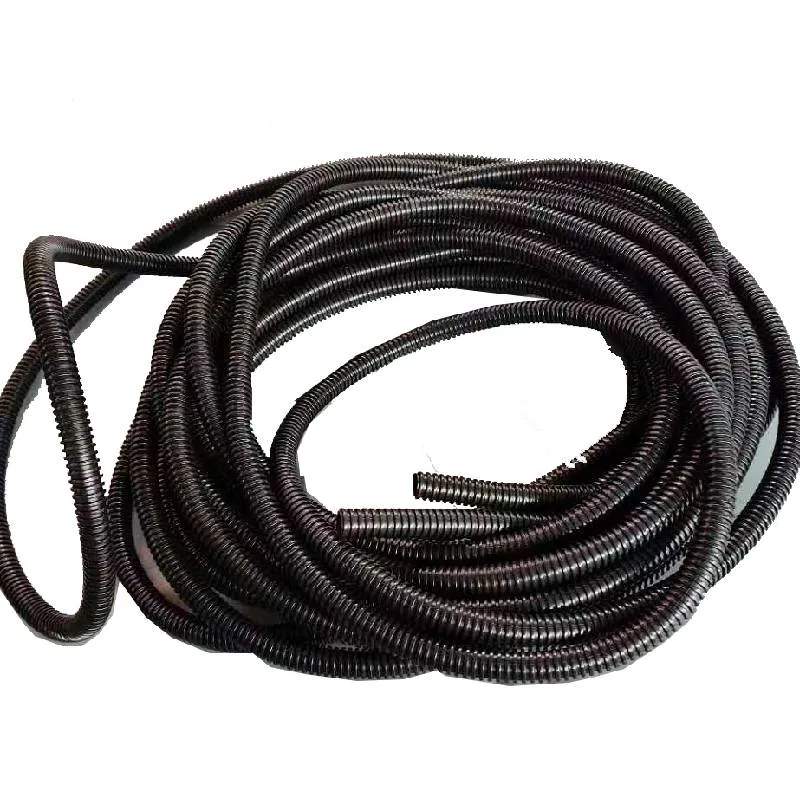
8 inch corrugated plastic pipe, typically constructed from polyethylene (PE) or polypropylene (PP), is a widely utilized conduit system for subsurface drainage, stormwater management, and industrial applications. Its corrugated structure imparts a high degree of flexibility and crush resistance, crucial for installations in varying soil conditions and under load. Positioned within the broader pipeline infrastructure sector, it serves as a cost-effective alternative to traditional concrete or metal piping, particularly in applications where lightweight construction and ease of installation are paramount. Core performance characteristics include hydraulic flow capacity, structural integrity under load (measured by ring stiffness), chemical resistance, and long-term durability. A primary industry challenge revolves around balancing cost with ensuring adequate structural performance to meet increasingly stringent load requirements and longevity expectations, alongside navigating evolving environmental regulations regarding material sourcing and end-of-life management.
Material Science & Manufacturing
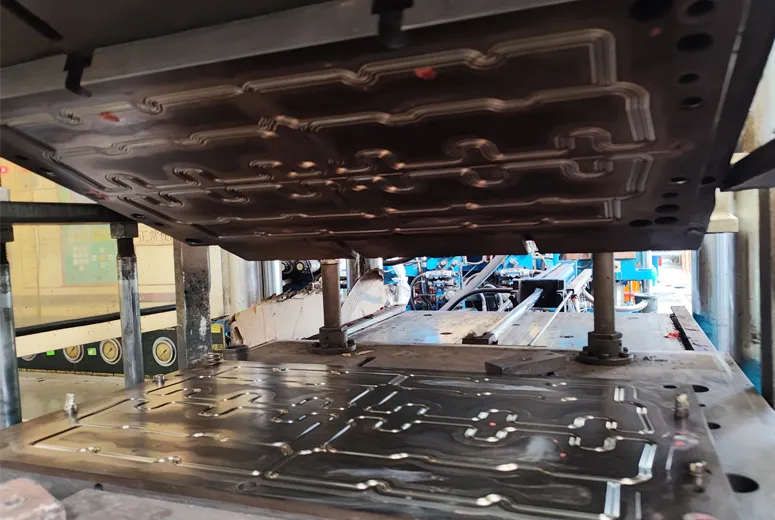
The predominant materials used in 8 inch corrugated plastic pipe are high-density polyethylene (HDPE) and polypropylene (PP). HDPE offers superior impact resistance and flexibility, particularly at lower temperatures, while PP exhibits higher tensile strength and resistance to creep. Raw material selection is governed by the intended application and environmental conditions. Manufacturing typically involves extrusion, followed by corrugation and assembly. Extrusion utilizes a thermoplastic resin, melted and forced through a die to create a continuous pipe profile. The corrugation process, often achieved through rollers or molds, imparts the structural rigidity necessary to withstand external loads. Critical parameters during extrusion include melt temperature, die pressure, and cooling rate, impacting the pipe's dimensional accuracy and mechanical properties. Corrugation parameters – profile depth, pitch, and speed – influence ring stiffness and buckling resistance. Quality control focuses on wall thickness uniformity, material density, and corrugation profile consistency, verified through non-destructive testing methods like ultrasonic thickness gauging. Chemical compatibility of the polymer with anticipated soil contaminants is also a critical manufacturing consideration.
Performance & Engineering
The performance of 8 inch corrugated plastic pipe is fundamentally dictated by its ability to withstand external loads without collapsing or deforming. Force analysis, incorporating principles of soil mechanics and structural engineering, is vital. External loads include soil overburden, surface traffic loads (e.g., vehicles), and hydrostatic pressure. Ring stiffness, a measure of the pipe's resistance to flattening, is a key engineering parameter. It’s calculated based on the pipe’s dimensions and material properties. Environmental resistance is crucial; prolonged exposure to UV radiation, temperature fluctuations, and chemical attack can lead to degradation. UV stabilizers are frequently incorporated into the polymer formulation to mitigate UV-induced degradation. Compliance requirements vary depending on the application and jurisdiction. For stormwater management, adherence to local drainage codes and environmental regulations is mandatory. For subsurface drainage, considerations include filter fabric compatibility and potential for siltation. Functional implementation necessitates proper jointing techniques (e.g., bell-and-spigot, couplers) to ensure a watertight seal and maintain structural integrity throughout the system. Geotechnical investigations are vital to accurately assess soil conditions and determine appropriate pipe selection and installation depth.
Technical Specifications
| Parameter | HDPE (Standard Grade) | PP (Homopolymer) | PP (Copolymer) |
|---|---|---|---|
| Nominal Diameter (in) | 8 | 8 | 8 |
| Ring Stiffness (psi) | 48 | 55 | 50 |
| Tensile Strength (psi) | 4,000 | 6,000 | 5,500 |
| Impact Strength (Izod Notched, ft-lb/in) | 10 | 8 | 9 |
| Operating Temperature Range (°F) | -40 to 180 | -20 to 195 | -10 to 212 |
| Long-Term Creep Resistance | Good | Excellent | Very Good |
Failure Mode & Maintenance
Common failure modes in 8 inch corrugated plastic pipe include creep rupture (gradual deformation under sustained load), fatigue cracking (due to repeated stress cycles, often from traffic loads), ovalation (distortion of the circular cross-section), and joint failure (leakage or separation at connections). Creep rupture is more prevalent in PP pipes under high sustained loads and elevated temperatures. Fatigue cracking is often initiated at stress concentrators, such as corrugation peaks or damaged areas. Environmental factors, such as UV exposure and chemical attack, can accelerate degradation and contribute to failure. Maintenance typically involves visual inspection for signs of deformation, cracking, or leakage. Regular cleaning to remove debris and sediment is crucial to maintain hydraulic capacity. For minor cracks, repair sleeves or patching compounds can be employed. Significant structural damage necessitates pipe replacement. Preventative maintenance includes proper installation techniques (e.g., adequate bedding and backfill compaction) and periodic monitoring of critical sections. Failure analysis, involving material testing and fracture surface examination, is vital for determining the root cause of failures and implementing corrective actions.
Industry FAQ
Q: What is the impact of soil corrosivity on the long-term performance of HDPE corrugated pipe?
A: Soil corrosivity, specifically the presence of sulfates, chlorides, and organic acids, can degrade HDPE over extended periods. These chemicals can cause chain scission and embrittlement, reducing the pipe's tensile strength and impact resistance. Selecting HDPE formulations with enhanced chemical resistance and employing protective coatings or barriers (e.g., geotextiles) are crucial mitigation strategies. Regular soil testing is recommended to assess corrosivity levels and inform material selection.
Q: How does the bedding material affect the load-bearing capacity of corrugated pipe?
A: Proper bedding material is critical. Inadequate bedding, or the use of angular or rocky materials, can create stress concentrations and reduce the pipe's load-bearing capacity. A uniformly compacted layer of granular material (e.g., sand, gravel) provides uniform support and distributes loads evenly. The bedding material's compaction density and gradation directly influence the pipe's ability to withstand external loads without deformation or failure.
Q: What are the advantages of corrugated PP pipe over corrugated HDPE pipe for high-temperature applications?
A: PP generally exhibits a higher service temperature compared to HDPE. This makes corrugated PP pipe a preferable choice in applications where the pipe is exposed to elevated temperatures (e.g., industrial effluent discharge). PP retains its structural integrity and stiffness at higher temperatures where HDPE may soften or deform. However, PP may have lower impact resistance at lower temperatures than HDPE.
Q: How do I determine the appropriate pipe stiffness for a specific application?
A: The required pipe stiffness is determined by the anticipated external loads, soil conditions, and installation depth. Geotechnical investigations are essential to characterize the soil properties and calculate the maximum loads the pipe will experience. Local drainage codes and regulations often specify minimum stiffness requirements. Engineering calculations, utilizing established formulas and safety factors, should be performed to verify that the selected pipe meets the design criteria.
Q: What is the role of a geotextile filter fabric when using corrugated pipe for drainage?
A: A geotextile filter fabric is used to prevent soil particles from entering the pipe and clogging the drainage system. It allows water to pass through while retaining soil fines. This maintains hydraulic capacity and prevents premature failure due to siltation. The geotextile’s permeability, pore size, and strength must be appropriate for the specific soil conditions and flow rates.
Conclusion
8 inch corrugated plastic pipe represents a versatile and cost-effective solution for a wide range of drainage and conveyance applications. Its performance is intrinsically linked to material selection, manufacturing quality, proper installation, and environmental considerations. Understanding the interplay between structural mechanics, material science, and soil conditions is paramount for ensuring long-term reliability and minimizing the risk of failure.
Future advancements in corrugated plastic pipe technology are likely to focus on developing more sustainable materials (e.g., recycled plastics, bio-based polymers), enhancing creep resistance and impact strength, and incorporating smart monitoring systems for early detection of potential failures. Continued research and development efforts are crucial for optimizing the performance and extending the service life of these vital infrastructure components.