
Introduction
Corrugated High-Density Polyethylene (HDPE) is a versatile, lightweight, and durable plastic conduit widely utilized across diverse industrial applications, including drainage, telecommunications, infrastructure, and increasingly, protective encasement for power cables. Positioned within the industrial chain as a critical component in infrastructure development and utility deployment, corrugated HDPE offers a cost-effective alternative to traditional materials like concrete, steel, and PVC. Its core performance characteristics center on its exceptional crush resistance, flexibility allowing for installation in challenging terrains, superior chemical resistance, and long-term durability in harsh environmental conditions. A primary driver for its adoption is the increasing demand for lighter-weight materials that reduce installation costs and improve project timelines. While seemingly simple in construction, the manufacturing and material science behind corrugated HDPE are complex, influencing its ultimate mechanical and environmental performance. This guide provides an in-depth technical overview of corrugated HDPE, covering its material science, manufacturing processes, performance characteristics, failure modes, and relevant industry standards.
Material Science & Manufacturing
Corrugated HDPE is manufactured from High-Density Polyethylene (HDPE) resin, a thermoplastic polymer known for its high strength-to-density ratio. The raw material, HDPE, is typically produced through the catalytic polymerization of ethylene. Key properties influencing the final product’s performance include molecular weight distribution, density (typically between 0.941 and 0.965 g/cm³), and Melt Flow Index (MFI). Higher density HDPE generally exhibits greater tensile strength and stiffness. Additives such as UV stabilizers, antioxidants, and colorants are often incorporated into the resin formulation to enhance its resistance to degradation and improve its long-term performance.
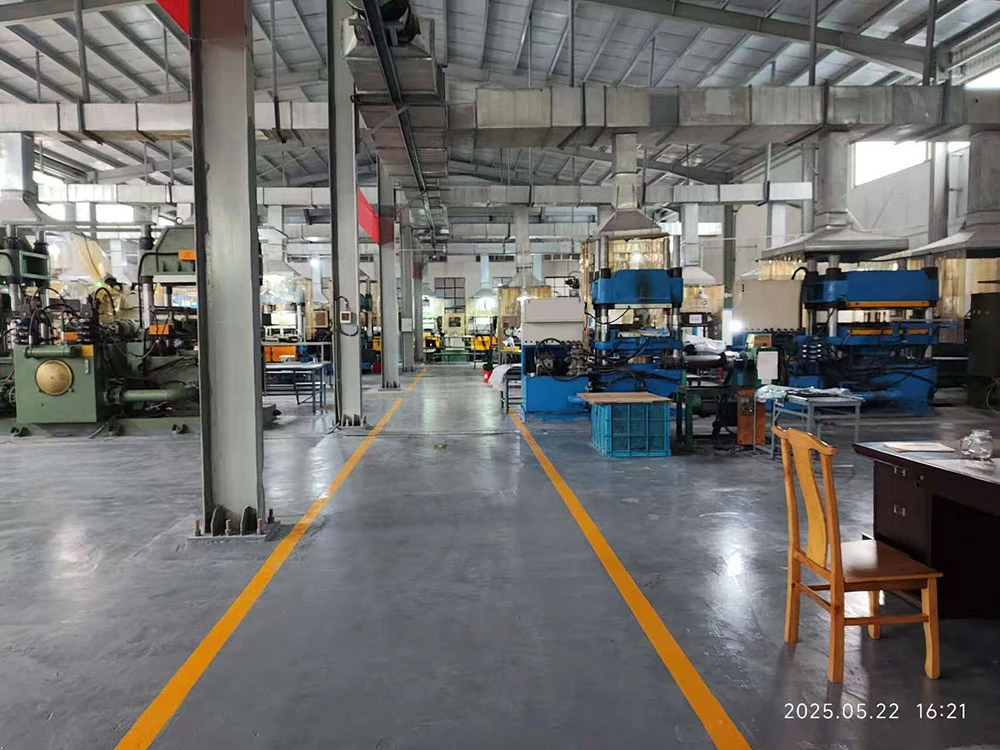
The manufacturing process primarily involves extrusion and corrugation. First, HDPE resin is melted and extruded through a circular die to form a continuous pipe. This pipe then enters a corrugation unit, which utilizes a series of rollers with precisely engineered profiles to form the characteristic corrugated pattern. The pitch (distance between peaks) and depth of the corrugations are critical parameters, directly impacting the pipe’s crush resistance and flexibility. Following corrugation, the pipe may undergo cooling and sizing operations to ensure dimensional accuracy. Quality control during manufacturing focuses on maintaining consistent wall thickness, corrugation profile, and material density. Parameter control during extrusion (temperature, screw speed, die pressure) is crucial to prevent defects such as melt fracture and inconsistencies in material distribution. Further processing, such as bell-and-spigot joint formation or pre-installed pull cords, may be performed depending on the intended application.
Performance & Engineering
The performance of corrugated HDPE is heavily reliant on its structural integrity under load. Crush resistance, a key performance indicator, is determined by the pipe’s geometry (corrugation profile) and material properties. Force analysis utilizing finite element modeling (FEM) is commonly employed to predict the pipe’s behavior under various loading scenarios, including static loads from soil cover and dynamic loads from traffic. The corrugated structure distributes loads efficiently, preventing localized stress concentrations.
Environmental resistance is another critical factor. HDPE exhibits excellent chemical resistance to a wide range of acids, bases, and solvents commonly found in soil and industrial environments. However, prolonged exposure to ultraviolet (UV) radiation can cause degradation, leading to embrittlement and reduced mechanical properties. Therefore, UV stabilizers are essential in applications exposed to sunlight. Temperature fluctuations also affect performance; while HDPE maintains good ductility at low temperatures, elevated temperatures can reduce its stiffness and load-bearing capacity. Compliance requirements vary depending on the application and geographical location. For instance, drainage applications often require compliance with ASTM F2306 standards, which specify minimum crush resistance and joint tightness requirements. Similarly, telecommunications applications may necessitate adherence to specific standards regarding flammability and electrical properties.
Technical Specifications
| Parameter | Units | Typical Value | Test Method |
|---|---|---|---|
| Crush Resistance (10% Deformation) | lbs/ft | 600-1200 | ASTM F2306 |
| Tensile Strength | psi | 4,000-6,000 | ASTM D638 |
| Elongation at Break | % | 300-600 | ASTM D638 |
| Melt Flow Index (MFI) | g/10min | 0.5-2.0 | ASTM D1238 |
| Density | g/cm³ | 0.941-0.965 | ASTM D1505 |
| Water Absorption (24 hrs) | % | <0.5 | ASTM D570 |
Failure Mode & Maintenance
Corrugated HDPE, while durable, is susceptible to specific failure modes. Fatigue cracking can occur under cyclical loading, particularly in areas of high stress concentration, such as at joints or where the pipe is subjected to repeated bending. Delamination, the separation of layers within the corrugated wall, can result from manufacturing defects or impact damage. Environmental degradation, primarily due to UV exposure, leads to embrittlement and reduced tensile strength. Oxidation, accelerated by high temperatures, can also contribute to material degradation.
Maintenance primarily focuses on preventative measures. Proper installation, ensuring adequate bedding and backfill support, is crucial to minimize stress on the pipe. Avoiding direct exposure to sunlight or using UV-resistant formulations for exposed applications extends service life. Regular visual inspections can identify signs of damage, such as cracks, deformations, or discoloration. If damage is detected, localized repairs may be possible using appropriate patching materials and techniques. However, significant damage often necessitates pipe replacement. For underground applications, cathodic protection may be considered in corrosive soil environments to mitigate corrosion of any metallic components used in conjunction with the HDPE pipe.
Industry FAQ
Q: What is the impact of soil acidity on the long-term performance of corrugated HDPE?
A: While HDPE exhibits excellent chemical resistance, highly acidic soil conditions can, over extended periods, lead to slow degradation. The rate of degradation depends on the pH level, temperature, and duration of exposure. It’s recommended to consult with a geotechnical engineer to assess the soil’s chemical composition and select an appropriate HDPE formulation or consider protective coatings if necessary.
Q: How does the corrugation profile affect the crush resistance, and are there standardized profiles?
A: The corrugation profile directly impacts crush resistance. Deeper and more frequent corrugations generally provide higher crush resistance. There are several standardized corrugation profiles defined by organizations like ASTM. The optimal profile depends on the application and the anticipated load requirements. A steeper profile can also affect flexibility, so a balance is needed.
Q: What are the considerations for joining corrugated HDPE sections, and what are the common failure modes associated with joints?
A: Corrugated HDPE sections are typically joined using bell-and-spigot connections with rubber gaskets, or through solvent welding. Proper alignment and gasket compression are critical for ensuring a watertight seal. Common failure modes at joints include gasket failure, misalignment leading to stress concentrations, and improper solvent welding resulting in weak bonds. Regular inspection of joints is recommended.
Q: Can corrugated HDPE be used in direct burial applications without a concrete encasement?
A: Yes, corrugated HDPE is frequently used in direct burial applications without a concrete encasement, provided adequate bedding and backfill support are provided. The bedding material should be properly compacted to distribute loads evenly and prevent point loading on the pipe. Soil conditions and anticipated traffic loads must be considered when determining the appropriate bedding material and backfill compaction requirements.
Q: What is the typical service life expectancy of corrugated HDPE in a standard drainage application?
A: The typical service life expectancy of corrugated HDPE in a standard drainage application is 50+ years, assuming proper installation and minimal exposure to extreme environmental conditions. However, factors like UV exposure, soil chemistry, and loading conditions can influence the actual service life. Regular inspections and preventative maintenance can help maximize its lifespan.
Conclusion
Corrugated HDPE represents a significant advancement in conduit technology, offering a compelling combination of durability, flexibility, and cost-effectiveness. Its inherent material properties, coupled with optimized manufacturing processes and structural design, provide superior performance in a wide range of applications. Understanding the interplay between material science, engineering principles, and relevant industry standards is paramount for ensuring successful implementation and maximizing its longevity.
Looking ahead, advancements in HDPE resin formulations, particularly those enhancing UV resistance and impact strength, will further expand its application scope. The adoption of smart monitoring technologies embedded within the corrugated HDPE structure will enable real-time assessment of structural integrity and proactive maintenance scheduling. This integration of material science, engineering, and technology positions corrugated HDPE as a critical infrastructure component for the foreseeable future.