
Introduction
Corrugated polyethylene (PE) pipe transitioned to polyvinyl chloride (PVC) represents a significant evolution in subsurface drainage and fluid conveyance systems. Initially, corrugated PE pipe gained prominence due to its lightweight nature, flexibility, and cost-effectiveness, primarily utilized in agricultural drainage, septic field systems, and stormwater management. However, the introduction of corrugated PVC pipe addresses inherent limitations of PE, namely its susceptibility to deformation under sustained load and lower temperature resistance. Corrugated PVC, while possessing similar flexibility advantages, offers superior structural rigidity, crush resistance, and enhanced long-term performance in diverse soil conditions and temperature ranges. This technical guide comprehensively examines the material science, manufacturing processes, performance characteristics, failure modes, and industry standards governing corrugated PVC pipe, providing a detailed analysis for engineers, procurement specialists, and industry professionals.
Material Science & Manufacturing
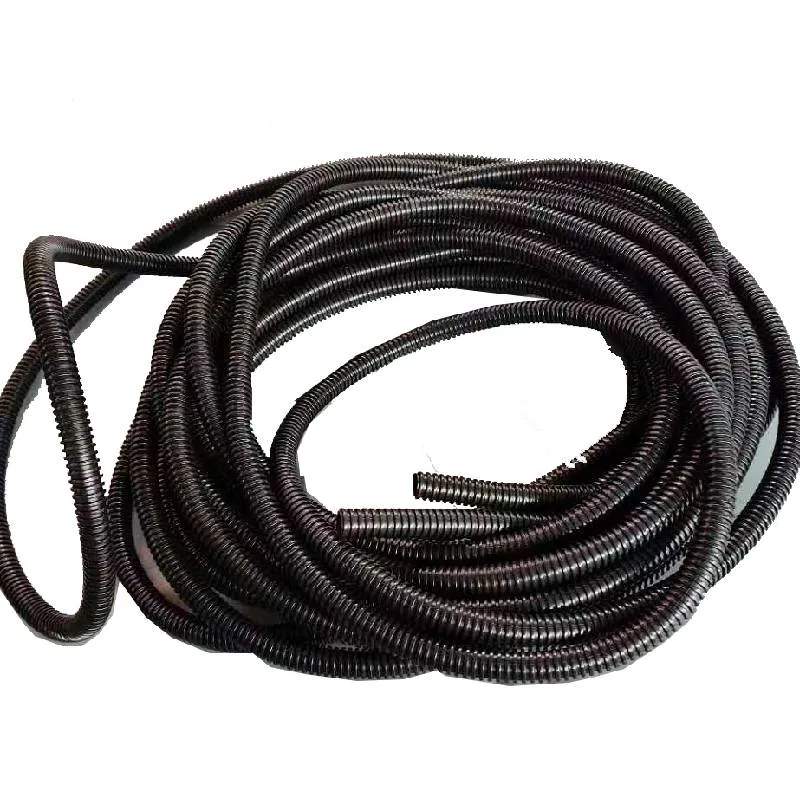
Corrugated PVC pipe fundamentally relies on the properties of Polyvinyl Chloride, a thermoplastic polymer known for its chemical inertness, durability, and relatively low cost. The PVC compound typically incorporates stabilizers (e.g., tin-based or calcium-zinc-based), lubricants, and impact modifiers to enhance processability and long-term performance. The raw PVC resin is compounded with these additives and then extruded through a circular die to form a continuous pipe profile. The crucial step involves corrugation, achieved using multiple sets of contoured rollers that impart the characteristic ribbed structure to the pipe. These rollers are precision-engineered to maintain consistent corrugation profile and depth, directly impacting the pipe’s structural integrity. The corrugated profile increases the pipe's bending length and ring stiffness without requiring a substantial increase in wall thickness. Post-extrusion, the pipe undergoes cooling, cutting to specified lengths, and bell-and-spigot or solvent weld coupling attachment. Critical parameters include extrusion temperature control (typically between 180-210°C), roller speed synchronization, and accurate dimensional control of the corrugations. Manufacturing defects, such as inconsistent corrugation depth, excessive ovality, or incomplete fusion during coupling attachment, significantly compromise performance. The resin selection also dictates performance; Schedule 40 PVC is common for drainage, while Schedule 80 is used for higher-pressure applications. The long-term creep resistance of PVC is also a crucial consideration, affected by temperature and sustained load.
Performance & Engineering
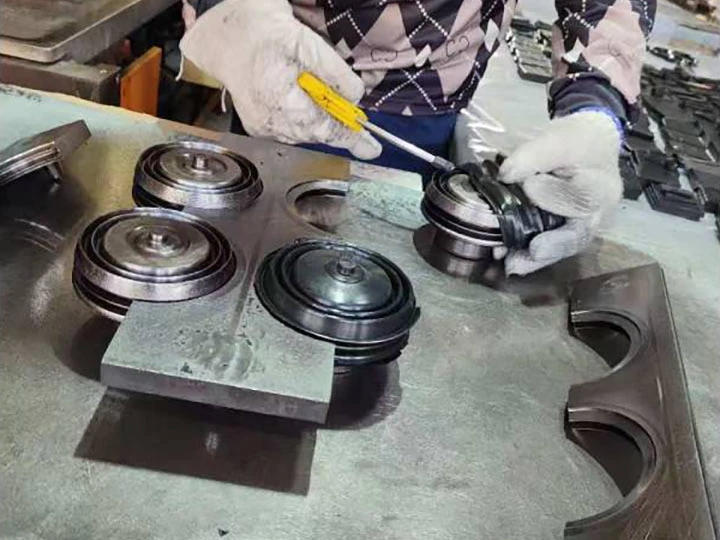
The performance of corrugated PVC pipe is dictated by several key engineering parameters. Ring stiffness, measured in psi, represents the pipe’s resistance to flattening under external load, crucial for buried applications subject to soil overburden and traffic loads. Parallel plate load testing, as defined by ASTM D2412, is the standard method for determining ring stiffness. Another vital parameter is the pipe’s crush resistance, which defines the maximum load it can withstand before collapse. This is directly related to the corrugation profile and PVC wall thickness. Hydraulic performance is governed by the Manning’s roughness coefficient (n), typically around 0.011 for PVC, indicating relatively smooth flow characteristics. Long-term performance is affected by creep, the gradual deformation under sustained load. PVC exhibits creep, particularly at elevated temperatures, impacting the pipe’s structural integrity over its service life. Geotechnical considerations are paramount; soil type, compaction, and groundwater levels directly influence the load distribution and potential for pipe deformation. Joint integrity is also critical; properly solvent-welded or mechanically coupled joints are essential to maintain hydraulic efficiency and prevent infiltration. Finite Element Analysis (FEA) is increasingly employed to model the structural behavior of corrugated PVC pipe under various loading scenarios, optimizing the design and ensuring long-term reliability. Chemical resistance is generally excellent, but prolonged exposure to strong acids or solvents should be avoided.
Technical Specifications
| Parameter | Unit | Typical Value (Drainage Pipe - 6" Diameter) | Testing Standard |
|---|---|---|---|
| Nominal Pipe Size | inches | 6 | ASTM D1785 |
| Material | - | PVC (Polyvinyl Chloride) | ASTM D1785 |
| Ring Stiffness | psi | 34 | ASTM D2412 |
| Crush Resistance | lbs/ft | 1200 | ASTM D2412 |
| Wall Thickness | inches | 0.085 | ASTM D1785 |
| Corrugation Profile | inches | 0.375 (depth) | Manufacturer Specification |
Failure Mode & Maintenance
Corrugated PVC pipe is susceptible to several failure modes. Creep rupture, as previously mentioned, occurs due to long-term deformation under sustained load, particularly at elevated temperatures. This manifests as ovality and eventual cracking. Environmental stress cracking (ESC) can occur when the pipe is exposed to certain chemicals or solvents under tensile stress. UV degradation can embrittle the PVC material, especially in exposed applications. Joint failures are common, often resulting from improper solvent welding techniques, poor surface preparation, or inadequate coupling engagement. Impact damage from construction equipment or heavy objects can cause cracking or complete failure. Ground movement and settlement can induce stress on the pipe, leading to deformation or joint separation. Maintenance primarily focuses on preventative measures: proper installation techniques, avoiding excessive loading, ensuring adequate backfill compaction, and protecting the pipe from UV exposure. Regular inspection for signs of deformation, cracking, or joint leakage is recommended. Minor cracks can sometimes be repaired using PVC cement and patching materials, but significant damage typically necessitates pipe replacement. Maintaining accurate as-built drawings and records of installation conditions aids in identifying potential failure areas.
Industry FAQ
Q: What is the impact of soil corrosivity on the long-term performance of corrugated PVC pipe?
A: Soil corrosivity, particularly the presence of sulfates and chlorides, can accelerate the degradation of PVC over time. While PVC itself is chemically inert to many substances, prolonged exposure to corrosive elements can lead to material embrittlement and reduced lifespan. Selecting a PVC compound formulated with appropriate stabilizers and implementing protective measures, such as a polyethylene wrap, can mitigate these effects. Geotechnical investigation prior to installation is crucial to assess soil corrosivity levels.
Q: How does temperature affect the load-carrying capacity of corrugated PVC pipe?
A: Elevated temperatures significantly reduce the load-carrying capacity of corrugated PVC due to increased creep. PVC exhibits a temperature-dependent reduction in strength and stiffness. Design calculations must account for anticipated operating temperatures, and derating factors should be applied to the allowable loads accordingly. Conversely, low temperatures can make PVC more brittle and susceptible to impact damage.
Q: What are the key differences between solvent-welded and mechanical couplings for corrugated PVC pipe?
A: Solvent-welded couplings create a homogenous joint, fusing the PVC material together and providing a watertight seal. This method requires careful surface preparation, proper solvent application, and adequate curing time. Mechanical couplings, such as rubber gasket couplings, offer faster installation and can accommodate some degree of misalignment. However, they rely on the gasket’s integrity and are potentially more susceptible to leakage over time if not properly tightened or if the gasket deteriorates.
Q: What considerations should be made when selecting backfill material for corrugated PVC pipe installations?
A: Backfill material should be free of sharp objects and debris that could damage the pipe. Granular materials, such as sand or gravel, provide good drainage and support. Clayey soils should be avoided, as they can retain moisture and exert excessive lateral pressure. Proper compaction is essential to ensure uniform support and prevent pipe deformation. Bedding material should be placed around the pipe to provide a smooth and stable foundation.
Q: What are the advantages of corrugated PVC over corrugated polyethylene (PE) in subsurface drainage applications?
A: Corrugated PVC offers superior ring stiffness and crush resistance compared to corrugated PE, making it more suitable for applications with heavy loads or unstable soil conditions. PVC also exhibits lower creep deformation, resulting in a longer service life. While PE is generally more flexible, PVC's increased structural integrity often outweighs this advantage in many drainage scenarios. PVC also typically has a higher temperature resistance than PE.
Conclusion
Corrugated PVC pipe represents a robust and reliable solution for a wide range of subsurface drainage and fluid conveyance applications. Its enhanced structural properties, coupled with chemical resistance and relatively low cost, make it a preferred alternative to corrugated PE in many scenarios. Understanding the material science, manufacturing processes, and potential failure modes is crucial for ensuring long-term performance and maximizing the service life of these systems. Careful attention to installation best practices, proper material selection, and ongoing maintenance are paramount to mitigating risks and achieving optimal results.
Future advancements in PVC compounding and manufacturing techniques will likely focus on enhancing creep resistance, improving UV stability, and developing more sustainable materials. Increased adoption of FEA modeling and data-driven performance analysis will enable more precise design optimization and predictive maintenance strategies. As environmental regulations become more stringent, the development of recyclable PVC formulations will become increasingly important, furthering the long-term viability of corrugated PVC pipe as a sustainable infrastructure solution.