
Introduction
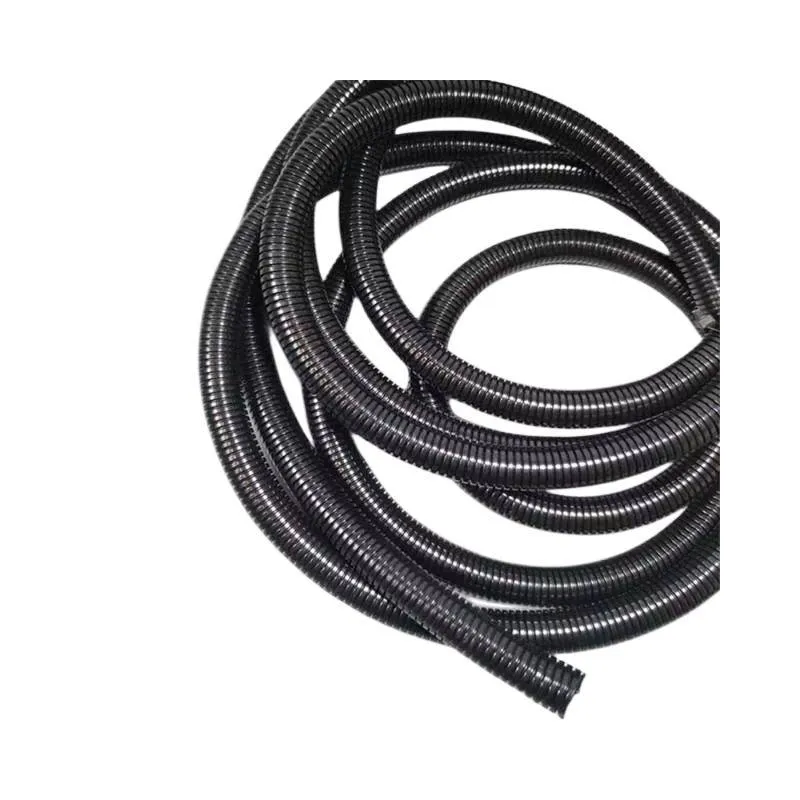
Corrugated plastic tubing is a versatile, lightweight solution widely utilized across numerous industries including automotive, agriculture, construction, and wire and cable management. Technically, it is a split or non-split flexible conduit manufactured from thermoplastic materials, typically Polyethylene (PE), Polypropylene (PP), or Polyvinyl Chloride (PVC). Its defining characteristic – the corrugated wall structure – provides a high degree of flexibility, allowing for bending around corners and adaptation to complex routing scenarios. In the industry chain, it serves as a protective covering for electrical wiring, hydraulic hoses, pneumatic lines, and various other components, offering abrasion resistance, environmental protection, and organizational benefits. Core performance characteristics include bend radius, tensile strength, crush resistance, temperature resistance, and UV stability, all critical factors dictating its suitability for specific applications. Unlike rigid conduits, corrugated tubing prioritizes flexibility and ease of installation, though often at the expense of ultimate impact strength.
Material Science & Manufacturing
The foundation of corrugated plastic tubing lies in the properties of its constituent thermoplastic resins. Polyethylene (PE), particularly Low-Density Polyethylene (LDPE) and High-Density Polyethylene (HDPE), offers excellent flexibility, low cost, and good chemical resistance. Polypropylene (PP) provides higher temperature resistance and improved stiffness compared to PE, making it suitable for more demanding environments. Polyvinyl Chloride (PVC) delivers robust chemical resistance and inherent flame retardancy, but can be less flexible. Additives such as UV stabilizers, antioxidants, and plasticizers are commonly incorporated to enhance performance and processability.
Manufacturing typically involves extrusion. The thermoplastic resin is melted and forced through a die that simultaneously forms the corrugated profile. A key parameter is the extrusion temperature, influencing melt viscosity and ultimately, the dimensional accuracy and surface finish of the tubing. Corrugation is created using a series of rollers or shaping plates integrated into the die assembly. The ‘pitch’ (distance between corrugation peaks) and ‘height’ (amplitude of the corrugation) are crucial parameters controlling flexibility and structural integrity. Split tubing is produced by slitting the tubing lengthwise after extrusion. For applications requiring enhanced mechanical strength, a reinforcing helix wire (typically steel or stainless steel) can be simultaneously inserted during extrusion. Post-extrusion processes may include cooling, sizing, printing (for identification and branding), and coiling or cutting to specified lengths. Control of cooling rates is essential to minimize warping and maintain dimensional stability. Parameter control regarding resin moisture content is vital to prevent defects like surface bubbling during extrusion.
Performance & Engineering
Performance assessment of corrugated plastic tubing centers on its ability to withstand mechanical stress, environmental exposure, and maintain its functional integrity over time. Force analysis is critical; the corrugated structure distributes loads effectively, enhancing crush resistance. However, localized stresses can occur at the peaks of the corrugations, leading to potential failure points. The bend radius is a key engineering parameter, dictated by the tubing’s material and wall thickness. Exceeding the minimum bend radius can cause kinking or cracking, compromising functionality. Environmental resistance is paramount, particularly UV degradation. Prolonged exposure to ultraviolet radiation can cause chain scission in the polymer, leading to embrittlement and loss of mechanical properties. The addition of UV stabilizers mitigates this effect. Temperature resistance is also crucial, influencing the tubing's flexibility and strength. PVC generally exhibits superior temperature resistance compared to PE and PP. Compliance requirements vary by industry and region, often governed by standards related to flame retardancy (UL 94, IEC 60695), electrical safety (UL, CSA), and environmental regulations (RoHS, REACH). Furthermore, for applications involving fluid transport, chemical compatibility must be assessed to ensure the tubing does not degrade or leach harmful substances into the conveyed medium. Static electricity dissipation is also a critical performance factor in some applications, often addressed with conductive additives.
Technical Specifications
| Parameter | PE (LDPE) | PP | PVC | Reinforced Nylon |
|---|---|---|---|---|
| Operating Temperature (°C) | -40 to 60 | -20 to 90 | -30 to 85 | -40 to 120 |
| Tensile Strength (MPa) | 10-20 | 20-30 | 30-50 | 60-80 |
| Crush Resistance (N/mm) | 400-600 | 600-800 | 800-1200 | 1000-1500 |
| Minimum Bend Radius (mm) | 8D | 10D | 12D | 5D |
| UV Resistance (ASTM D4459) | Moderate (with stabilizers) | Good (with stabilizers) | Excellent | Excellent (with stabilizers) |
| Chemical Resistance | Good to many acids & bases | Good to many solvents | Excellent to acids, bases & oils | Excellent, but susceptible to strong acids |
Failure Mode & Maintenance
Corrugated plastic tubing is susceptible to several failure modes. Fatigue cracking can occur under repeated bending or vibration, especially at the corrugation peaks. Delamination, or separation of layers in multi-layered tubing, can result from improper bonding during manufacturing or prolonged exposure to moisture. Environmental degradation, primarily due to UV exposure and temperature fluctuations, leads to embrittlement and reduced impact strength. Oxidation, particularly in PP, can cause surface cracking and loss of flexibility. Crush damage can occur if the tubing is subjected to excessive loads exceeding its crush resistance. In split tubing, the slit edge can become frayed or torn, compromising its protective function.
Preventative maintenance includes regular visual inspections to identify cracks, abrasions, or signs of degradation. Avoid exceeding the recommended bend radius and load limits. Protect the tubing from prolonged exposure to direct sunlight and extreme temperatures. For applications in harsh chemical environments, ensure material compatibility. If damage is detected, replace the affected section immediately. Cleaning can be performed with mild soap and water; avoid abrasive cleaners or solvents that may damage the plastic. Storage should be in a cool, dry place away from direct sunlight. Periodic application of a UV protective coating can extend the service life of the tubing in outdoor applications. For reinforced tubing, inspecting the integrity of the helix wire is also crucial, looking for signs of corrosion or breakage.
Industry FAQ
Q: What is the impact of wall thickness on the overall performance of corrugated plastic tubing?
A: Wall thickness is a critical parameter. Increasing wall thickness directly enhances crush resistance, tensile strength, and impact resistance. However, it also reduces flexibility and increases material cost. A thicker wall provides a greater cross-sectional area to distribute loads, but it also makes bending more difficult. The optimal wall thickness is determined by balancing these factors based on the specific application requirements.
Q: How does the choice of material affect the tubing’s suitability for outdoor use?
A: Material selection significantly impacts outdoor performance. PVC generally offers superior UV resistance compared to PE and PP, making it a better choice for long-term outdoor exposure without additional stabilization. PE and PP require UV stabilizers to prevent degradation. The type and concentration of stabilizer are crucial; inadequate stabilization will lead to embrittlement and cracking over time.
Q: Can corrugated plastic tubing be used in applications involving exposure to oils and solvents?
A: It depends on the specific oil or solvent. PVC exhibits good resistance to many oils and solvents, but some may cause swelling or degradation. PE and PP have varying degrees of resistance depending on the solvent. It’s crucial to consult a chemical compatibility chart to verify that the tubing material is compatible with the specific chemical environment. Testing a sample of the tubing with the target chemical is highly recommended.
Q: What are the advantages and disadvantages of split versus non-split corrugated tubing?
A: Split tubing offers easier installation and accessibility for wiring or cables, as it can be opened and closed without disconnecting existing components. However, it provides slightly less mechanical protection and abrasion resistance compared to non-split tubing. Non-split tubing offers a more secure and continuous protective barrier but requires disconnecting components for installation or removal.
Q: How does the reinforcing helix wire contribute to the performance of corrugated tubing?
A: The reinforcing helix wire dramatically increases the tubing's crush resistance and tensile strength. It prevents the corrugations from collapsing under load and provides added structural support. Stainless steel wire offers superior corrosion resistance compared to steel wire, making it suitable for harsh environments. It also reduces the tendency for elongation under tensile stress.
Conclusion
Corrugated plastic tubing represents a cost-effective and versatile solution for protecting and organizing wires, cables, and other components across a broad spectrum of industries. Its performance is inextricably linked to the selection of appropriate materials – PE, PP, PVC, and nylon – each offering distinct advantages and limitations. Understanding the interplay between material properties, manufacturing parameters, and application requirements is paramount for ensuring optimal performance and longevity. Proper consideration of environmental factors, mechanical stresses, and compliance regulations is essential for selecting the correct tubing for a given application.
Future trends are likely to focus on the development of bio-based and recycled thermoplastic materials to enhance sustainability. Advancements in extrusion technology will enable tighter control of corrugation profiles and wall thicknesses, further optimizing performance characteristics. Integration of smart materials, such as conductive polymers for static dissipation or self-healing polymers for damage repair, could represent significant innovations in the field. Ultimately, continued research and development will refine the properties and broaden the application scope of this essential industrial component.