
Introduction
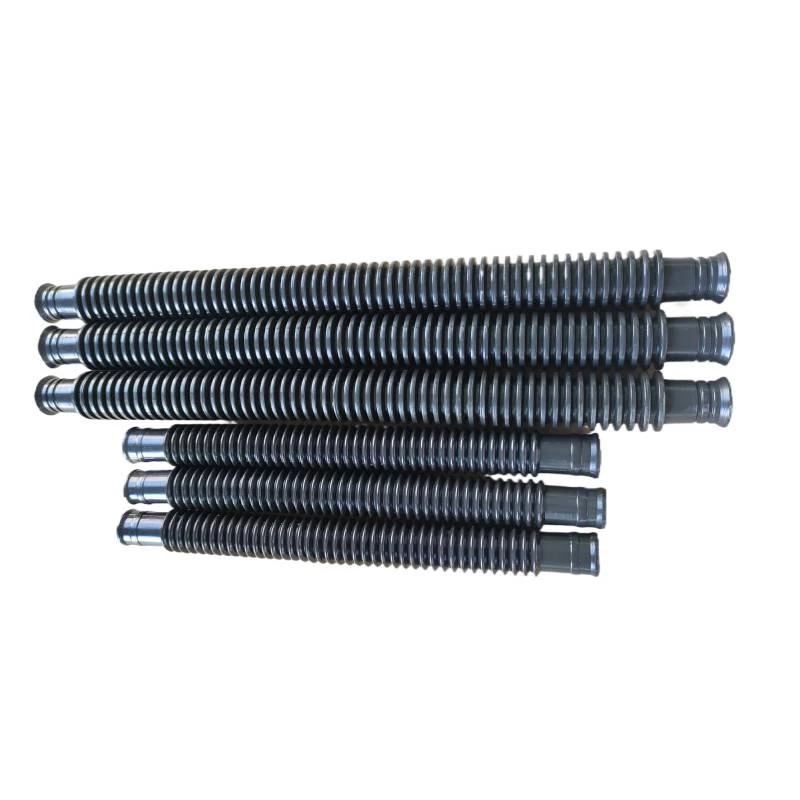
Industrial pipe fixtures represent a critical component in fluid and gas conveyance systems across a diverse range of sectors, including chemical processing, oil and gas, power generation, and water treatment. These fixtures, encompassing elbows, tees, reducers, couplings, flanges, and valves, are engineered to facilitate the efficient and safe transport of process media while withstanding demanding operating conditions. Their technical position within the industry chain is fundamental; they bridge the gap between linear pipe sections, enabling complex network geometries and providing access points for maintenance, inspection, and flow control. Core performance characteristics center on pressure containment, leak tightness, corrosion resistance, and mechanical strength, directly impacting system reliability and operational safety. The selection of appropriate fixtures necessitates a thorough understanding of material compatibility, operating temperatures, pressures, and applicable industry standards. This guide provides a comprehensive technical overview of industrial pipe fixtures, covering material science, manufacturing processes, performance considerations, failure modes, and relevant standards.
Material Science & Manufacturing
Industrial pipe fixtures are manufactured from a variety of materials, each selected for specific application requirements. Carbon steel, alloy steel, stainless steel (304/316L, Duplex, Super Duplex), and various polymers (PVC, CPVC, HDPE, PP) are commonly employed. Carbon steel offers high strength and affordability but is susceptible to corrosion; therefore, protective coatings (epoxy, polyurethane) are often applied. Alloy steels, incorporating elements like chromium and molybdenum, enhance strength and toughness. Stainless steels provide superior corrosion resistance, particularly in aggressive chemical environments. Polymers are utilized for lower pressure, temperature, and chemically benign applications. Manufacturing processes vary depending on the material and fixture type. For metallic fixtures, forging, casting, and machining are prevalent. Forging, particularly for high-pressure components, imparts enhanced grain structure and mechanical properties. Casting is cost-effective for complex geometries. Machining refines dimensions and surface finish. Welding, utilizing processes like SMAW, GTAW, and GMAW, is crucial for joining components and ensuring structural integrity. Polymer fixtures are typically produced via injection molding or extrusion. Key parameter control during manufacturing includes precise dimensional tolerances, weld quality (penetration, porosity, heat-affected zone), and heat treatment procedures to achieve desired mechanical properties. Material certifications (ASTM, EN) are essential for traceability and quality assurance. Critical material properties include yield strength, tensile strength, elongation, hardness, and impact toughness, all of which are rigorously tested.
Performance & Engineering
The performance of industrial pipe fixtures is dictated by several engineering considerations. Pressure containment is paramount, governed by ASME B31.3 (Process Piping) and EN 13480 (Metallic Industrial Piping). Fixtures must withstand internal pressure without failure, considering hoop stress and longitudinal stress. Finite Element Analysis (FEA) is routinely employed to model stress distributions under various loading scenarios. Leak tightness is another critical factor, achieved through precise machining of sealing surfaces and the use of appropriate gaskets (e.g., PTFE, graphite). Environmental resistance demands careful material selection to mitigate corrosion, erosion, and chemical attack. Galvanic corrosion, occurring when dissimilar metals are in contact in the presence of an electrolyte, must be addressed through proper material pairing and insulation. Thermal expansion and contraction, induced by temperature fluctuations, introduce stresses that require compensation through expansion loops or flexible connectors. Dynamic loading, resulting from fluid flow, vibration, and seismic activity, must be accounted for in the design. Furthermore, fixtures must comply with relevant safety regulations, such as those pertaining to hazardous materials handling and explosion prevention (ATEX, IECEx). Force analysis, including bending moments and shear forces, is essential for selecting appropriately sized fixtures and ensuring structural integrity.
Technical Specifications
| Parameter | Carbon Steel (A53 Grade B) | Stainless Steel 304/304L | PVC Schedule 80 | Polypropylene (PP) | Ductile Iron (ASTM A536 65-45-12) |
|---|---|---|---|---|---|
| Maximum Operating Pressure (PSI) | 720 | 650 | 400 | 150 | 900 |
| Temperature Range (°F) | -20 to 750 | -320 to 600 | -40 to 140 | 32 to 176 | -20 to 800 |
| Tensile Strength (MPa) | 400-530 | 500-700 | 55 | 35 | 400-550 |
| Yield Strength (MPa) | 250-350 | 205-275 | N/A (Brittle) | N/A (Brittle) | 240-345 |
| Corrosion Resistance | Low (Requires Coating) | Excellent | Good (Limited Chemicals) | Good (Limited Chemicals) | Moderate (Requires Coating) |
| Typical Applications | Water, Air, Non-Corrosive Fluids | Chemical Processing, Food & Beverage | Irrigation, Drainage | Chemical Waste, Low-Pressure Systems | Water Distribution, Wastewater Treatment |
Failure Mode & Maintenance
Industrial pipe fixtures are susceptible to several failure modes. Corrosion is a primary concern, leading to pitting, crevice corrosion, and stress corrosion cracking. Fatigue cracking can occur under cyclic loading, particularly at weld points or areas of stress concentration. Erosion, caused by abrasive particles in the fluid stream, gradually wears away material. Mechanical damage, resulting from impact or improper installation, can cause deformation or fracture. Delamination can occur in polymer fixtures due to UV exposure or chemical attack. Oxidation, especially at elevated temperatures, weakens metallic components. Maintenance is crucial for preventing failures. Regular visual inspections should identify signs of corrosion, erosion, or damage. Non-destructive testing (NDT) methods, such as ultrasonic testing (UT), radiographic testing (RT), and liquid penetrant testing (PT), can detect internal flaws. Periodic pressure testing verifies the integrity of the system. Proper lubrication of valves and actuators is essential for smooth operation. Replacement of worn gaskets and seals prevents leaks. Protective coatings should be reapplied as needed. Detailed maintenance records facilitate proactive maintenance and ensure compliance with regulatory requirements. Corrective actions must follow established procedures and be documented thoroughly. For weldments, periodic weld inspection and re-certification are vital to long-term structural integrity.
Industry FAQ
Q: What is the primary difference between using Schedule 40 and Schedule 80 PVC pipe fixtures, and how does it affect pressure capacity?
A: The difference lies in the wall thickness. Schedule 80 PVC has a thicker wall than Schedule 40. This increased wall thickness results in a significantly higher pressure-bearing capacity. Schedule 80 is typically used for higher-pressure applications, corrosive environments, and situations where increased mechanical strength is required. The pressure rating for Schedule 80 is approximately twice that of Schedule 40 for the same pipe diameter.
Q: How do you select the appropriate gasket material for a flanged connection in a system handling highly corrosive acids?
A: Gasket selection for corrosive acids requires careful consideration of chemical compatibility. PTFE (Teflon) is generally the most widely recommended material due to its exceptional resistance to a broad range of chemicals, including strong acids. However, the specific acid and its concentration should be verified against PTFE's chemical resistance charts. Other options, such as Viton (FKM) or Chemraz, may be suitable depending on the specific acid and temperature. The gasket's thickness and bolt load are also critical for achieving a leak-tight seal.
Q: What are the key considerations when welding dissimilar metals in a pipe fixture system to prevent galvanic corrosion?
A: When welding dissimilar metals, galvanic corrosion is a significant concern. Minimize the area of contact between the dissimilar metals. Use a filler metal compatible with both base metals. Consider applying a corrosion-inhibiting coating to the joint. Isolate the dissimilar metals with a non-conductive material like PTFE or a plastic washer. Proper weld procedure qualification is crucial to ensure a sound weld and minimize corrosion initiation sites. Regular monitoring for signs of corrosion is also recommended.
Q: What are the advantages of using duplex stainless steel fixtures over traditional 304/316 stainless steel in seawater applications?
A: Duplex stainless steels (e.g., 2205) offer significantly improved resistance to pitting, crevice corrosion, and stress corrosion cracking in seawater compared to 304/316 stainless steel. They possess higher strength, allowing for thinner wall thicknesses and reduced weight. The addition of nitrogen and higher chromium content contribute to the enhanced corrosion resistance. While generally more expensive than austenitic stainless steels, the increased longevity and reduced maintenance requirements often justify the higher initial cost in seawater environments.
Q: What is the importance of hydrostatic testing after installation of a new pipe fixture system, and what parameters need to be monitored?
A: Hydrostatic testing is critical for verifying the integrity of a newly installed pipe fixture system. It involves pressurizing the system with a test fluid (typically water) to a pressure exceeding the maximum operating pressure. This test identifies leaks, weak points, and potential failures before the system is put into service. Parameters to be monitored include pressure stability (pressure drop over time), visual inspection for leaks, and assessment of any deformation or unusual noises. The test duration and acceptance criteria are defined by applicable codes and standards (e.g., ASME B31.3).
Conclusion
Industrial pipe fixtures represent a foundational element within process industries, and their selection, installation, and maintenance directly influence system reliability, safety, and operational efficiency. A comprehensive understanding of material science, manufacturing processes, and performance engineering principles is paramount for ensuring optimal performance and preventing catastrophic failures. The choice of material must be driven by a thorough assessment of operating conditions, including fluid composition, temperature, pressure, and potential for corrosion.
Looking forward, advancements in materials science, such as the development of new alloys with enhanced corrosion resistance and the increasing adoption of non-metallic materials like fiber-reinforced polymers, will continue to shape the future of industrial pipe fixture design. Furthermore, the integration of smart sensors and predictive maintenance technologies will enable proactive identification of potential failures, minimizing downtime and optimizing asset lifecycle management. Adherence to established international standards and best practices is essential for maintaining a high level of safety and performance.