
Introduction
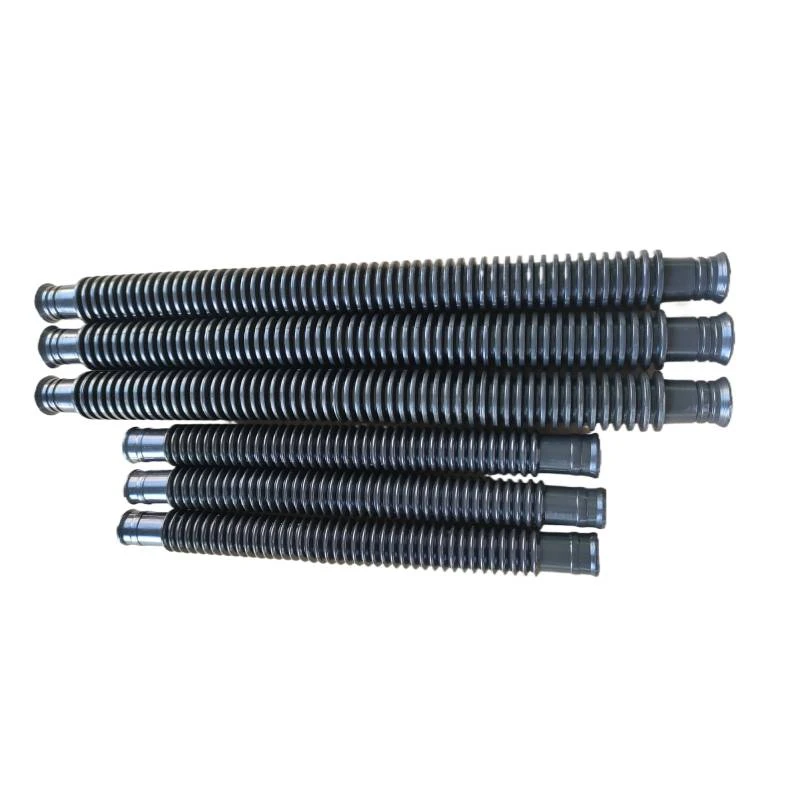
Plastic corrugated pipe represents a significant advancement in fluid conveyance and structural applications, offering a lightweight, durable, and cost-effective alternative to traditional materials like concrete, metal, and solid wall PVC. These pipes are widely utilized across diverse industries including drainage, telecommunications ducting, agricultural irrigation, and automotive applications. The primary function of corrugated pipe lies in its ability to provide structural rigidity while maintaining flexibility, crucial for installations traversing uneven terrain or subject to ground movement. This guide will provide a comprehensive technical overview of plastic corrugated pipes, covering material science, manufacturing processes, performance characteristics, failure modes, and relevant industry standards. Understanding these aspects is critical for informed procurement, proper installation, and long-term system reliability, addressing core industry pain points related to material degradation, installation challenges, and lifespan predictability.
Material Science & Manufacturing
The most common materials used in the manufacture of plastic corrugated pipes are Polyethylene (PE), including High-Density Polyethylene (HDPE) and Low-Density Polyethylene (LDPE), and Polypropylene (PP). HDPE is favored for its superior strength-to-density ratio, excellent chemical resistance, and ability to withstand temperature extremes. LDPE offers increased flexibility but lower tensile strength, making it suitable for less demanding applications. PP exhibits good chemical resistance and can be used in higher temperature environments. The manufacturing process generally begins with the extrusion of a thermoplastic resin. This molten plastic is then formed into a corrugated profile using a corrugated mold. The crucial parameters during extrusion include melt temperature (typically 180-240°C for PE and PP), extrusion rate, and die pressure. These parameters directly impact the wall thickness uniformity and the corrugated profile’s dimensional accuracy. Following corrugation, the pipe undergoes cooling, often via water bath quenching, to solidify the shape. Critical control points during cooling include water temperature and quenching rate to prevent warping or dimensional instability. For reinforced corrugated pipes, a spiral-wound reinforcing layer, typically steel wire or fiber-reinforced polymer, is applied during or after the corrugation process. The tension of this reinforcing layer is a critical parameter, influencing the pipe’s load-bearing capacity and resistance to collapse. Chemical compatibility between the plastic matrix and the reinforcement material must also be carefully considered to prevent corrosion or delamination.
Performance & Engineering
The performance of plastic corrugated pipe is dictated by several engineering considerations. A critical aspect is the pipe’s ability to withstand external loads, including soil load, traffic load, and hydrostatic pressure. Buckling analysis is paramount, considering the pipe’s diameter, wall thickness, corrugated profile geometry, and soil properties. The Bellmouth effect, where soil arches over the pipe, transferring the load to the crown, is a key design element. Environmental resistance is another crucial factor. Ultraviolet (UV) radiation can cause degradation of the polymer, leading to embrittlement and loss of strength. UV stabilizers, such as carbon black or hindered amine light stabilizers (HALS), are typically incorporated into the plastic formulation to mitigate this effect. Chemical resistance is also vital, particularly in applications involving wastewater or aggressive soil conditions. The long-term impact of chemical exposure on the pipe’s mechanical properties must be evaluated. Furthermore, the pipe’s hydraulic performance, including flow capacity and head loss, needs careful consideration, influenced by the pipe’s internal diameter, corrugated profile, and surface roughness. Compliance requirements, such as AASHTO M294 for culverts and ASTM F405 for corrugated polyethylene drainage pipe, dictate minimum performance standards related to load-bearing capacity, impact resistance, and durability.
Technical Specifications
| Parameter | HDPE Corrugated Pipe (12" Diameter) | PP Corrugated Pipe (12" Diameter) | PVC Corrugated Pipe (12" Diameter) |
|---|---|---|---|
| Material | High-Density Polyethylene (HDPE) | Polypropylene (PP) | Polyvinyl Chloride (PVC) |
| Diameter (Nominal) | 12 inches (305 mm) | 12 inches (305 mm) | 12 inches (305 mm) |
| Wall Thickness (Average) | 0.75 inches (19 mm) | 0.65 inches (16.5 mm) | 0.8 inches (20 mm) |
| Corrugation Profile | Circular/Annular | Circular/Annular | Spiral |
| Stiffness (PSI) | 48 PSI | 35 PSI | 52 PSI |
| Tensile Strength (ASTM D638) | 4,000 PSI | 3,500 PSI | 6,500 PSI |
| Operating Temperature Range | -40°F to 180°F (-40°C to 82°C) | -20°F to 200°F (-29°C to 93°C) | -10°F to 140°F (-23°C to 60°C) |
Failure Mode & Maintenance
Plastic corrugated pipes are susceptible to several failure modes. Creep rupture, a time-dependent deformation under sustained load, is a common concern, particularly in HDPE pipes. This is exacerbated by elevated temperatures and high stress levels. Environmental stress cracking (ESC), caused by the combined action of stress and aggressive chemicals, can lead to brittle failure. UV degradation, as previously mentioned, causes embrittlement and reduces impact resistance. Fatigue cracking can occur due to repeated loading and unloading, especially in applications subject to traffic or seismic activity. Delamination, the separation of layers in reinforced pipes, can result from corrosion of the reinforcement or poor bonding between the plastic and the reinforcement. Maintenance primarily involves visual inspection for cracks, deformation, and signs of UV degradation. Regular cleaning to remove debris and sediment is essential to maintain hydraulic capacity. For reinforced pipes, inspection of the exposed reinforcement for corrosion is crucial. Repair options typically involve sleeve installation or localized patching with compatible materials. Preventative measures include proper installation techniques, including adequate bedding and backfill compaction, and the use of UV-resistant formulations or protective coatings. Load calculations should be conservative to account for potential variations in soil conditions and traffic loads.
Industry FAQ
Q: What is the impact of soil acidity on the long-term performance of HDPE corrugated pipe?
A: High soil acidity can accelerate the degradation of HDPE, particularly if the pipe is not properly protected. Acidic soils can leach plasticizers and reduce the polymer's molecular weight, leading to embrittlement and reduced strength. Utilizing HDPE formulations with enhanced chemical resistance and incorporating a protective geotextile layer can mitigate this risk.
Q: How does the corrugated profile geometry affect the load-bearing capacity of the pipe?
A: The corrugated profile provides structural rigidity, but the geometry significantly influences the load-bearing capacity. Deeper and more frequent corrugations generally increase the pipe’s resistance to collapse. The shape of the corrugations (circular, annular, or spiral) also impacts performance, with annular corrugations often offering superior load distribution. Finite element analysis (FEA) is often used to optimize the profile for specific loading conditions.
Q: What are the key considerations for selecting the appropriate reinforcing material for corrugated pipe?
A: The choice of reinforcing material depends on the application and the expected loading conditions. Steel wire offers high strength and is cost-effective but is susceptible to corrosion. Fiber-reinforced polymers (FRP) provide excellent corrosion resistance and a high strength-to-weight ratio but are typically more expensive. Compatibility between the reinforcement and the plastic matrix is critical to prevent delamination.
Q: What is the recommended bedding and backfill material for plastic corrugated pipe installations?
A: Proper bedding and backfill are crucial for providing uniform support and preventing excessive stress on the pipe. Granular materials, such as sand or gravel, are recommended for bedding to provide a stable foundation. Backfill should be compacted in layers to minimize settlement and ensure adequate lateral support. Geotextile fabrics can be used to separate the bedding material from the surrounding soil and prevent contamination.
Q: What testing methods are used to verify the quality and performance of plastic corrugated pipe?
A: Several standardized testing methods are employed, including hydrostatic pressure testing (ASTM D1597) to assess burst resistance, impact resistance testing (ASTM F2416) to evaluate damage tolerance, and deformation testing (ASTM F497) to measure pipe stiffness. Accelerated weathering tests (ASTM G154) are used to predict the long-term effects of UV exposure. Material property testing, such as tensile strength (ASTM D638) and elongation at break, is also performed to verify material quality.
Conclusion
Plastic corrugated pipe provides a versatile and cost-effective solution for a wide range of drainage, conveyance, and structural applications. Its lightweight nature, ease of installation, and resistance to corrosion make it a superior alternative to traditional materials in many scenarios. However, understanding the material science, manufacturing nuances, and potential failure modes is crucial for ensuring long-term performance and reliability. Proper material selection, careful installation practices, and regular maintenance are essential to maximize the lifespan and minimize the risk of failure.
The future of plastic corrugated pipe technology lies in the development of advanced polymer formulations with enhanced UV resistance, improved chemical compatibility, and increased creep resistance. Integration of smart sensors for real-time monitoring of pipe integrity and load conditions will further optimize performance and enhance predictive maintenance capabilities. Continued adherence to industry standards and rigorous quality control procedures will be paramount to maintaining the integrity and reliability of these critical infrastructure components.