
Introduction
Polyvinyl Chloride (PVC) pipe fittings are integral components in fluid conveyance systems across a broad spectrum of industries including water distribution, irrigation, chemical processing, and drainage. Positioned as connectors between PVC pipes, or between PVC pipe and other material pipes via transition fittings, they ensure leak-proof and structurally sound piping networks. These fittings encompass a diverse range including elbows, tees, couplings, reducers, and valves, each designed for specific applications. Core performance characteristics include pressure rating, temperature resistance, chemical inertness, and dimensional accuracy, dictating their suitability for various operational environments. PVC fittings offer a cost-effective alternative to metallic fittings, particularly in corrosive environments, and are valued for their ease of installation via solvent welding or threaded connections. Understanding the material properties, manufacturing processes, and performance limitations of PVC fittings is crucial for ensuring the longevity and reliability of fluid handling systems.
Material Science & Manufacturing
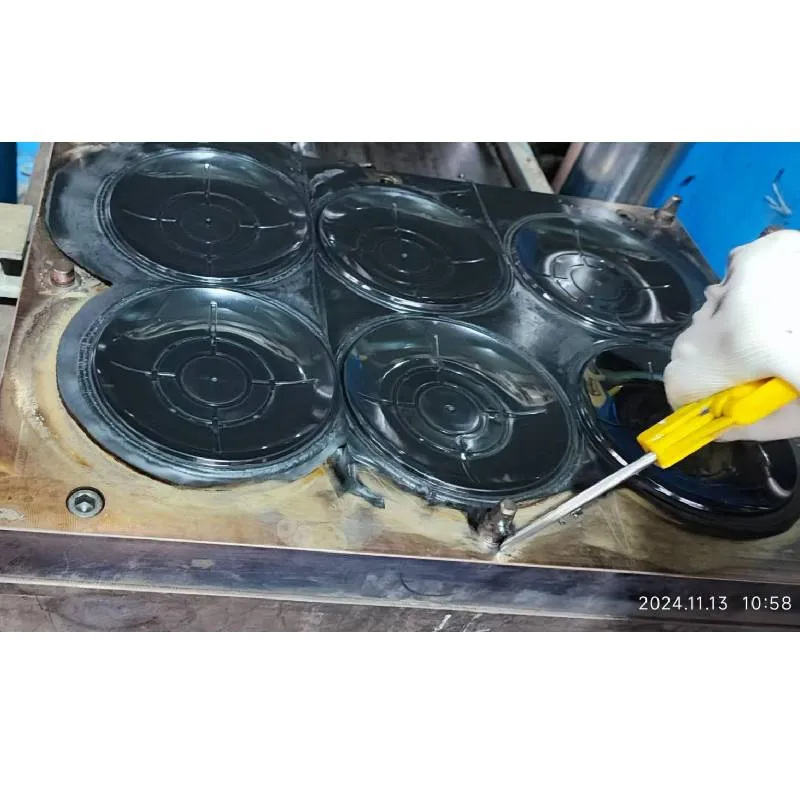
PVC fittings are primarily manufactured from Polyvinyl Chloride, a thermoplastic polymer produced through the polymerization of vinyl chloride monomer (VCM). The raw material’s properties – including molecular weight, K-value (a measure of molecular weight), and chlorine content – directly influence the fitting’s mechanical strength, chemical resistance, and thermal stability. Additives such as stabilizers (typically organotin compounds or calcium-zinc stabilizers to prevent thermal degradation), lubricants (to aid processing), and impact modifiers (to enhance toughness) are incorporated during compounding. Manufacturing processes vary depending on the fitting type and size. Small fittings are commonly produced via injection molding. This process involves melting PVC compound and injecting it under high pressure into a mold cavity. Critical parameters include melt temperature, injection pressure, and cooling time, all impacting the fitting's dimensional accuracy and surface finish. Larger diameter fittings, such as those exceeding 12 inches, are often manufactured using extrusion molding. This method involves forcing molten PVC through a die to create a continuous profile, which is then cut to length and shaped. For threaded fittings, threads are typically cut after molding, requiring precise tooling and quality control to ensure accurate thread engagement. Solvent welding, the most common joining method, relies on the chemical bonding between the PVC fitting and pipe through the application of a PVC primer and cement. The primer softens the PVC surface allowing the cement to fuse the two components creating a homogeneous bond. Proper solvent welding requires surface preparation, adequate ventilation, and adherence to recommended curing times.
Performance & Engineering
The performance of PVC pipe fittings is governed by several engineering principles. Stress analysis, particularly considering hydrostatic pressure and thermal expansion/contraction, is crucial for ensuring structural integrity. Finite Element Analysis (FEA) is commonly employed to model stress distributions within fittings under various load conditions. The pressure rating of a fitting, typically expressed in PSI or Bar, is determined by burst testing conducted according to industry standards. PVC's relatively low tensile strength necessitates careful design considerations to avoid stress concentrations at geometric discontinuities, such as the inside radius of elbows. Environmental resistance is a key performance aspect. While PVC exhibits excellent resistance to many chemicals, it can be susceptible to degradation from prolonged exposure to certain solvents, oils, and UV radiation. UV stabilizers are commonly added to formulations intended for outdoor applications. Temperature plays a significant role; PVC fittings lose strength and become more brittle at low temperatures and can soften and deform at elevated temperatures. Compliance with relevant standards like ASTM D1785 (for PVC pipe) and ASTM D2466 (for PVC fittings) is mandatory for ensuring safety and reliability. Furthermore, the coefficient of linear thermal expansion for PVC is significantly higher than that of metallic pipes, requiring expansion loops or flexible joints to accommodate thermal movement and prevent stress buildup in the system.
Technical Specifications
| Parameter | Schedule 40 PVC | Schedule 80 PVC | CPVC (Chlorinated PVC) |
|---|---|---|---|
| Material | Polyvinyl Chloride (PVC) | Polyvinyl Chloride (PVC) | Chlorinated Polyvinyl Chloride (CPVC) |
| Pressure Rating (PSI @ 73°F) | 400 | 600 | 400-1000 (depending on temp) |
| Temperature Range (°F) | -40 to 140 | -40 to 140 | -40 to 194 |
| Tensile Strength (PSI) | 6,000 - 7,000 | 6,500 - 7,500 | 7,000 – 8,000 |
| Flexural Modulus (PSI) | 400,000 - 450,000 | 420,000 - 470,000 | 450,000 - 500,000 |
| Impact Strength (Izod Notched, ft-lb/in) | 1.0 - 1.5 | 1.2 - 1.8 | 1.5 - 2.0 |
Failure Mode & Maintenance
PVC pipe fittings are susceptible to several failure modes. Brittle failure, especially at low temperatures, can occur due to impact or over-tightening of threaded connections. Long-term exposure to UV radiation causes embrittlement and cracking, particularly in fittings not formulated with adequate UV stabilizers. Chemical attack by certain solvents and aggressive chemicals can lead to swelling, softening, and eventual failure. Hydrostatic fatigue, resulting from repeated pressure cycles, can initiate cracks at stress concentration points. Delamination can occur in fittings manufactured with improper compounding or processing parameters. Solvent welding failures can result from inadequate surface preparation, improper cement application, or insufficient curing time. Maintenance practices include regular visual inspections for cracks, discoloration, or deformation. Protecting fittings from direct sunlight and extreme temperatures is crucial. Periodic testing of the system for leaks and pressure drops can identify potential problems. For threaded connections, proper torqueing during installation and periodic re-tightening are recommended. In cases of identified damage, fittings should be replaced with components that meet the original specifications and standards. Avoid using abrasive cleaners which can scratch the surface and create weak points.
Industry FAQ
Q: What is the primary difference between Schedule 40 and Schedule 80 PVC fittings, and when should each be used?
A: Schedule 40 and Schedule 80 refer to the wall thickness of the fitting. Schedule 80 fittings have a thicker wall than Schedule 40, providing greater pressure-bearing capacity and improved impact resistance. Schedule 40 is suitable for general purpose applications with moderate pressure and temperature requirements, such as irrigation and cold water distribution. Schedule 80 is preferred for higher pressure applications, chemical processing, and systems requiring enhanced durability and safety.
Q: How does temperature affect the performance of PVC fittings?
A: PVC becomes more brittle at low temperatures and loses strength. High temperatures can cause softening and deformation. The maximum operating temperature for standard PVC fittings is typically 140°F (60°C). Exceeding this temperature can significantly reduce the fitting's pressure rating and lead to premature failure. CPVC fittings, with their higher chlorine content, offer improved temperature resistance up to 194°F (90°C).
Q: What is the correct procedure for solvent welding PVC fittings?
A: Proper solvent welding involves several steps. First, cut the pipe and fitting squarely. Deburr the pipe ends. Apply a PVC primer to both the pipe and fitting surfaces to soften the PVC. Immediately apply a generous coat of PVC cement to both surfaces. Quickly insert the fitting into the pipe, twisting slightly to ensure even cement distribution. Hold the joint firmly for 30 seconds to allow the cement to set. Allow the joint to cure for at least 24 hours before pressurizing the system.
Q: What are the common causes of leaks in solvent-welded PVC joints?
A: Common causes include inadequate surface preparation (failure to deburr or clean), insufficient primer or cement application, improper cement type (using cement not designed for the specific PVC formulation), insufficient curing time, and gaps between the pipe and fitting. Ensuring a tight, interference fit and following the manufacturer’s instructions for solvent welding are crucial for preventing leaks.
Q: Can PVC fittings be used with metal pipes? If so, what types of fittings are required?
A: PVC fittings cannot be directly solvent-welded to metal pipes. Transition fittings, such as threaded adapters or flanged connections, are required to join PVC and metal pipes. These adapters typically feature a female threaded PVC end and a male threaded metal end, or a flange for bolting to a metal flange. Compatibility between the PVC and metal materials must be considered to prevent galvanic corrosion.
Conclusion
PVC pipe fittings represent a versatile and cost-effective solution for fluid conveyance in a multitude of industrial applications. Their widespread adoption is predicated on a combination of factors including chemical resistance, ease of installation, and relatively low material cost. However, optimal performance and longevity are contingent upon a thorough understanding of their material properties, manufacturing processes, and potential failure modes. Careful consideration of factors such as temperature, pressure, chemical compatibility, and UV exposure is critical during material selection and system design.
Future developments in PVC fitting technology will likely focus on enhancing performance characteristics such as impact resistance and temperature stability through the incorporation of advanced polymer blends and additives. Increased emphasis on sustainable manufacturing practices and the development of recyclable PVC formulations are also anticipated. Proper installation techniques and adherence to relevant industry standards remain paramount to ensuring the reliable and safe operation of PVC piping systems.