
Introduction
Smooth lined corrugated plastic pipe (SLCPP) represents a significant advancement in subsurface drainage and fluid conveyance systems. Positioned within the broader realm of thermoplastic piping, SLCPP distinguishes itself through a unique combination of high structural strength, provided by the corrugated outer layer, and enhanced flow characteristics resulting from a smooth interior lining. Typically manufactured from polyethylene (PE) or polypropylene (PP), SLCPP is utilized extensively in agricultural drainage, storm water management, sanitary sewer applications, and increasingly, industrial effluent handling. Its core performance attributes—high crush resistance, lightweight construction, and minimized friction loss—address critical pain points in infrastructure projects where longevity, efficiency, and cost-effectiveness are paramount. The smooth interior lining drastically reduces headloss compared to conventional corrugated pipe, resulting in improved hydraulic capacity and reduced pumping costs. This guide provides a comprehensive technical overview of SLCPP, covering material science, manufacturing processes, performance characteristics, failure modes, and relevant industry standards.
Material Science & Manufacturing
SLCPP's performance is intrinsically linked to the properties of its constituent materials and the precision of its manufacturing processes. The corrugated layer is commonly produced from high-density polyethylene (HDPE) or polypropylene (PP), selected for their excellent impact resistance, durability, and chemical inertness. HDPE, exhibiting a semi-crystalline structure, offers high tensile strength and a relatively low coefficient of friction. PP provides enhanced temperature resistance, a crucial factor in certain effluent applications. The smooth inner lining typically utilizes linear low-density polyethylene (LLDPE), chosen for its superior smoothness and reduced friction coefficient compared to HDPE or PP. LLDPE's branched polymer structure allows for greater flexibility and ease of processing.
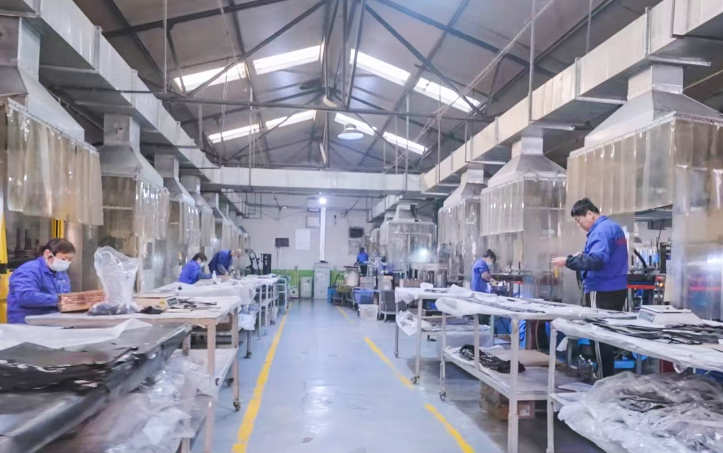
Manufacturing begins with the extrusion of the thermoplastic materials. The corrugated layer is formed using a circular corrugator, precisely shaping the molten plastic into the desired profile. Parameter control—specifically extrusion temperature, corrugator speed, and cooling rate—is vital to ensure consistent wall thickness and corrugation geometry. Variations in these parameters can lead to localized weaknesses and compromised crush resistance. Subsequently, the smooth inner lining is co-extruded directly onto the corrugated layer, ensuring strong adhesion. This co-extrusion process requires precise temperature synchronization between the two extruders to avoid delamination. Quality control measures include rigorous dimensional checks, hydrostatic pressure testing, and impact resistance assessments at various stages of production. The welding, if required for joining sections, commonly employs butt fusion or electrofusion techniques, ensuring a structurally sound and leak-proof connection. The consistency of weld parameters (temperature, pressure, and cooling time) is critical to prevent weld failures.
Performance & Engineering
The performance of SLCPP is heavily reliant on its structural integrity and hydraulic efficiency. Force analysis, particularly focusing on crush resistance, is a primary engineering consideration. The corrugated structure distributes external loads, enabling the pipe to withstand significant soil overburden and traffic loads. The peak crushing strength is determined through laboratory testing according to ASTM F894, and is directly related to the pipe’s ring stiffness and wall thickness. Environmental resistance, especially to UV degradation and chemical attack, is also crucial. HDPE and PP exhibit good UV resistance, but prolonged exposure can lead to embrittlement. The addition of UV stabilizers during the extrusion process mitigates this effect. Chemical resistance varies depending on the specific polymer and the chemical in question. Exposure to strong acids or solvents can cause swelling, cracking, or dissolution.
Hydraulic performance is defined by the pipe’s ability to convey fluids with minimal headloss. The smooth inner lining significantly reduces the Manning's roughness coefficient compared to standard corrugated pipe, resulting in increased flow capacity and reduced energy consumption for pumping. Compliance requirements include adherence to local and national regulations regarding storm water management and wastewater disposal. For example, in sanitary sewer applications, the pipe must be leak-proof and resistant to hydrogen sulfide (H2S) corrosion. Proper installation practices, including adequate bedding and backfill compaction, are essential to ensure long-term performance and prevent differential settlement. Geotechnical investigations are crucial to assess soil conditions and determine appropriate bedding materials.
Technical Specifications
| Parameter | Units | HDPE SLCPP (12” Diameter) | PP SLCPP (18” Diameter) |
|---|---|---|---|
| Nominal Diameter | inches | 12 | 18 |
| Ring Stiffness | psi | 48 | 65 |
| Crush Strength (10% Deflection) | psi | 1500 | 2200 |
| Manning's Roughness Coefficient | - | 0.012 | 0.012 |
| Tensile Strength (Inner Liner) | psi | 3500 | 3500 |
| Operating Temperature Range | °F | -40 to 140 | -20 to 176 |
Failure Mode & Maintenance
SLCPP, while durable, is susceptible to various failure modes. Fatigue cracking, induced by repeated loading and unloading, is a common issue, particularly in applications with heavy traffic or fluctuating ground water levels. This often initiates at the corrugation peaks due to stress concentration. Delamination between the corrugated layer and the smooth inner lining can occur if the co-extrusion process is not properly controlled or if subjected to significant shear stresses. Environmental degradation, specifically UV exposure and chemical attack, can lead to embrittlement and cracking. Oxidation, especially in the presence of elevated temperatures and oxygen, can degrade the polymer matrix, reducing its mechanical properties. Another significant failure mode is joint failure due to improper welding techniques or ground movement, resulting in leakage.
Preventative maintenance includes regular visual inspections for cracks, deformations, or signs of joint separation. Proper bedding and backfill compaction are crucial to minimize stress on the pipe and prevent differential settlement. For applications exposed to UV radiation, consider using UV-resistant coatings or protective coverings. In chemically aggressive environments, select a polymer with proven resistance to the specific chemicals involved. In the event of a crack or joint failure, repair options include localized patching with compatible thermoplastic materials or section replacement. For significant damage, a complete pipe replacement may be necessary. Implementing a cathodic protection system can mitigate corrosion in environments with high electrical conductivity.
Industry FAQ
Q: What is the impact of soil corrosivity on the long-term performance of SLCPP?
A: Soil corrosivity, particularly the presence of sulfates and chlorides, can accelerate the degradation of the thermoplastic materials. While HDPE and PP are generally chemically inert, prolonged exposure to highly corrosive soils can lead to stress cracking and reduced mechanical properties. Selecting a pipe with appropriate chemical resistance and implementing a protective barrier, such as a geotextile wrap, can mitigate this risk. Regular soil testing is recommended to assess the level of corrosivity.
Q: How does the smooth inner lining affect the potential for biofilm formation?
A: The smooth inner lining reduces the surface area available for biofilm attachment compared to corrugated pipe without a lining. However, biofilm formation can still occur, particularly in stagnant flow conditions. The type of biofilm and its impact on flow capacity depend on the specific water quality and microbial activity. Periodic cleaning and disinfection may be necessary in certain applications to prevent excessive biofilm buildup.
Q: What are the key considerations for installing SLCPP in areas with high groundwater?
A: High groundwater levels can exert significant hydrostatic pressure on the pipe, potentially causing deformation or uplift. Proper bedding and backfill compaction are crucial to counteract this pressure. Consideration should be given to the use of geotextiles to improve drainage and prevent soil erosion. Additionally, ensuring adequate anchoring of the pipe may be necessary in areas with unstable soil conditions.
Q: Can SLCPP be used in trenchless installation methods, such as directional drilling?
A: Yes, SLCPP is suitable for trenchless installation methods, including directional drilling. However, careful consideration must be given to the pipe's flexibility and pull strength. Proper lubrication and pull force control are essential to prevent damage during installation. The manufacturer's recommendations should be strictly followed regarding maximum allowable pulling forces and bending radii.
Q: What are the advantages of using SLCPP compared to concrete pipe in storm water applications?
A: SLCPP offers several advantages over concrete pipe, including lighter weight, ease of installation, and superior hydraulic performance due to the smooth inner lining. It is also more resistant to corrosion and less prone to cracking. While concrete pipe may offer higher crush strength in some applications, SLCPP provides an excellent balance of strength, durability, and cost-effectiveness, making it a preferred choice for many storm water management projects.
Conclusion
Smooth lined corrugated plastic pipe represents a compelling solution for a wide range of subsurface drainage and fluid conveyance applications. Its unique combination of high structural strength, enhanced hydraulic efficiency, and lightweight construction addresses critical industry pain points related to longevity, performance, and cost. The selection of appropriate materials—HDPE, PP, and LLDPE—coupled with precise manufacturing controls, ensures consistent product quality and reliability. Understanding the potential failure modes and implementing preventative maintenance measures are essential to maximizing the lifespan of SLCPP installations.
Looking forward, advancements in thermoplastic material science and manufacturing techniques will likely lead to further improvements in SLCPP performance. Innovations in polymer blends and co-extrusion processes may yield even greater chemical resistance, UV stability, and hydraulic efficiency. Furthermore, the integration of smart technologies, such as embedded sensors for monitoring pipe integrity, could revolutionize asset management and predictive maintenance strategies. SLCPP’s continued adoption will be driven by its ability to deliver sustainable and cost-effective infrastructure solutions.