
Introduction
Polyvinyl chloride (PVC) sewer pipe fittings represent a critical component in modern wastewater management systems. These fittings, encompassing elbows, tees, wyes, couplings, and adapters, facilitate the efficient and reliable conveyance of sanitary sewage. Positioned downstream from residential, commercial, and industrial sources, they connect PVC sewer pipes to create a sealed network transporting waste to treatment facilities. Unlike metallic counterparts, PVC offers inherent corrosion resistance, lightweight handling, and cost-effectiveness, making it a dominant material in gravity-fed sewer applications. Core performance characteristics revolve around maintaining structural integrity under hydrostatic pressure, resisting chemical attack from common wastewater constituents, and ensuring leak-proof joints capable of withstanding ground movement and temperature fluctuations. The design and manufacture of these fittings are governed by stringent industry standards to guarantee long-term performance and prevent environmental contamination. A key pain point within the industry revolves around ensuring long-term joint integrity, particularly in corrosive environments and areas prone to seismic activity.
Material Science & Manufacturing
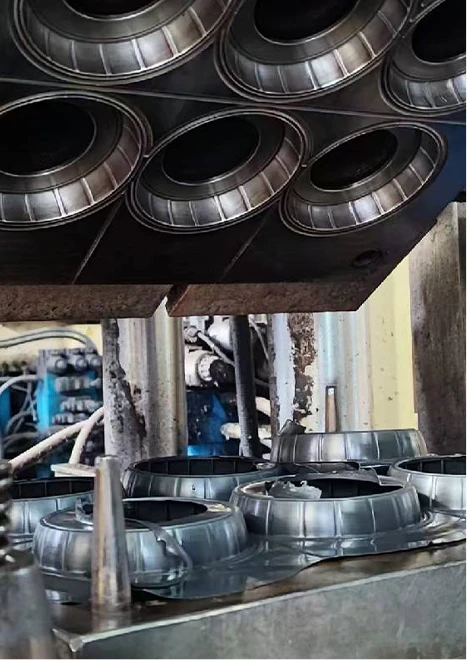
PVC sewer pipe fittings are primarily manufactured from rigid PVC compounds, typically formulated with poly(vinyl chloride) resin, plasticizers (often phthalates or alternative non-phthalate options), stabilizers (including tin-based or calcium-zinc stabilizers to prevent degradation from heat and UV exposure), lubricants, and pigments. The PVC resin dictates the base strength and chemical resistance, while plasticizers impart flexibility, crucial for impact resistance and sealing properties. Stabilizers are paramount in resisting thermal degradation during processing and extending service life. Manufacturing primarily employs injection molding for fittings under 12 inches in diameter, and compression molding or rotational molding for larger components. Injection molding involves melting PVC granules and injecting them under high pressure into a mold cavity. Critical parameters include melt temperature (typically 180-210°C), injection pressure (ranging from 400-1000 bar), and mold temperature (30-60°C). Precise control of these parameters is essential to ensure dimensional accuracy, minimize warpage, and achieve optimal material properties. Larger fittings may utilize compression molding, where pre-heated PVC material is placed in a mold and compressed. Post-molding operations include deburring, visual inspection, and dimensional verification to ensure compliance with relevant standards. Chemical compatibility between the PVC compound and potential wastewater constituents (e.g., hydrogen sulfide, fats, oils, and grease) is a crucial consideration in material selection.
Performance & Engineering
The performance of PVC sewer pipe fittings is dictated by several engineering principles. Hydrostatic pressure resistance is a primary concern, evaluated through burst pressure testing according to ASTM D2412. Fittings must withstand internal pressures generated by the column of wastewater without failure. Structural integrity is also assessed via ring stiffness testing (ASTM D2412) which measures the fitting's ability to resist deformation under load, crucial for preventing collapse under external soil loads. Environmental resistance encompasses resistance to chemical attack, UV degradation, and temperature fluctuations. Prolonged exposure to hydrogen sulfide (H2S) can cause sulfide stress cracking, necessitating the use of appropriate stabilizers in the PVC formulation. UV degradation can lead to embrittlement; therefore, the inclusion of UV stabilizers is critical for fittings exposed to sunlight. Temperature cycling induces thermal stress, potentially leading to cracking or joint failure. Coefficient of thermal expansion differences between the PVC fitting and the connected pipe must be accounted for during installation. Joint sealing performance relies on the elastomeric seal within the fitting or the use of solvent cement welding. Solvent cement welding creates a chemical bond between the PVC surfaces, achieving a strength comparable to the base material. The proper application of solvent cement (cleanliness, priming, cement application, and cure time) is paramount for a reliable seal. Furthermore, fittings must comply with regional building codes regarding slope requirements to ensure gravity flow and prevent solids buildup.
Technical Specifications
| Parameter | Unit | Typical Value | Testing Standard |
|---|---|---|---|
| Material | - | Rigid PVC (PVC Type I, Grade 1) | ASTM D1785 |
| Burst Pressure | psi | 300 (dependent on size and schedule) | ASTM D2412 |
| Ring Stiffness | psi | 200-400 (dependent on size and schedule) | ASTM D2412 |
| Operating Temperature Range | °F | -40 to 140 | ASTM D1785 |
| Chemical Resistance | - | Excellent to most common wastewater constituents | ASTM D543 |
| UV Resistance | - | Good (with UV stabilizers) | ASTM G154 |
Failure Mode & Maintenance
PVC sewer pipe fittings can experience several failure modes. Sulfide stress cracking (SSC) is a prevalent issue in environments with high H2S concentrations, leading to brittle fracture. This is often initiated at stress concentrators such as weld joints or areas of high residual stress. UV degradation causes embrittlement and cracking, particularly in fittings exposed to prolonged sunlight. Mechanical damage, such as impact from excavation equipment, can cause cracking or complete failure. Improper solvent cement welding results in weak joints prone to leakage. Joint separation due to ground movement or frost heave can occur if the fittings lack sufficient flexibility or are improperly installed. Corrosion of the PVC material, although rare, can occur due to prolonged exposure to aggressive chemicals. Maintenance primarily involves regular inspection for cracks, leaks, or signs of degradation. Minor cracks can sometimes be repaired using specialized PVC repair compounds. For significant damage, replacement of the fitting is typically necessary. Preventative maintenance includes ensuring proper installation techniques (solvent cementing procedures, adequate bedding and backfill), minimizing exposure to UV radiation, and controlling H2S levels in the sewer system through chemical treatment or ventilation. Regular CCTV inspection can identify potential problems before they escalate into major failures.
Industry FAQ
Q: What is the impact of differing thermal expansion coefficients between PVC fittings and other piping materials, such as ductile iron?
A: Differing thermal expansion coefficients create stress at the joints when temperature fluctuations occur. PVC expands and contracts more than ductile iron. This stress can lead to joint separation or cracking, particularly in rigid connections. Expansion joints or flexible couplings should be incorporated to accommodate these differences, preventing stress buildup and ensuring long-term integrity.
Q: How does the pH of wastewater affect the long-term performance of PVC sewer pipe fittings?
A: While PVC exhibits good resistance to a broad pH range, prolonged exposure to extremely acidic or alkaline wastewater can accelerate degradation. Highly acidic conditions can promote hydrolysis of the PVC polymer, weakening the material. Highly alkaline conditions can lead to saponification. Monitoring wastewater pH and utilizing PVC formulations with enhanced chemical resistance are crucial in such environments.
Q: What are the key considerations when selecting a solvent cement for PVC sewer pipe fittings?
A: Solvent cement selection depends on the PVC resin type, operating temperature, and environmental conditions. It’s critical to use a cement specifically formulated for sewer applications and compatible with the PVC fitting material. The cement’s viscosity, setting time, and shear strength are important parameters. Always follow the manufacturer’s instructions regarding surface preparation, priming, cement application, and curing time.
Q: What is the role of stabilizers in preventing sulfide stress cracking in PVC sewer fittings?
A: Stabilizers, such as calcium-zinc or tin-based compounds, inhibit the diffusion of hydrogen sulfide into the PVC matrix, reducing the likelihood of sulfide stress cracking. These stabilizers react with H2S, neutralizing its corrosive effects and maintaining the material's mechanical properties. The concentration and type of stabilizer are critical parameters for effective SSC prevention.
Q: How important is proper bedding and backfill material when installing PVC sewer pipe fittings?
A: Proper bedding and backfill are crucial for providing adequate support to the fittings and preventing stress concentrations. The bedding material should be granular and non-corrosive, conforming to the pipe’s outer diameter. Backfill material should be compacted in layers to provide uniform support and prevent settling. Insufficient or improper bedding can lead to deformation, cracking, and joint separation.
Conclusion
PVC sewer pipe fittings represent a robust and cost-effective solution for wastewater conveyance, offering inherent advantages in corrosion resistance and ease of installation. However, realizing their full potential requires a thorough understanding of material science, manufacturing processes, and engineering principles. Attention to detail during material selection, manufacturing quality control, and installation procedures are paramount to ensure long-term performance and prevent premature failure. Addressing potential failure modes like sulfide stress cracking and UV degradation through appropriate material formulations and preventative maintenance strategies is crucial for maintaining the integrity of sewer infrastructure.
The continued development of advanced PVC compounds with enhanced chemical resistance and improved UV stabilization will further extend the service life of these critical components. Implementing robust inspection programs and utilizing innovative repair techniques will also contribute to the sustainability of wastewater management systems. Ultimately, a holistic approach encompassing material science, engineering design, and diligent maintenance is essential to optimizing the performance and longevity of PVC sewer pipe fittings.