

Introduction
Metal parts suppliers are integral to a vast array of industries, providing components critical to the functionality of manufactured goods ranging from automotive systems and aerospace structures to medical devices and industrial machinery. This guide details the technical aspects of sourcing and specifying metal parts, focusing on material selection, manufacturing processes, performance characteristics, potential failure modes, and relevant industry standards. The core performance of a metal part is defined by its mechanical properties (strength, ductility, hardness), corrosion resistance, dimensional accuracy, and adherence to specified tolerances. The supply chain for metal parts is complex, often involving casting, forging, machining, and various surface treatments. A significant pain point for procurement managers is ensuring consistent quality, traceability, and adherence to increasingly stringent regulatory requirements, especially regarding material composition and environmental impact. This guide aims to provide a comprehensive technical resource for addressing these challenges.
Material Science & Manufacturing
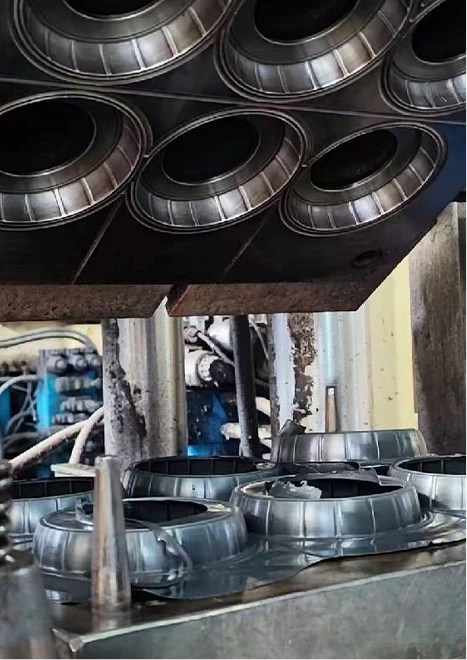
The selection of raw materials is paramount in metal part manufacturing. Common materials include carbon steels (varying in carbon content to achieve different strength and weldability characteristics), alloy steels (with additions of elements like chromium, nickel, and molybdenum for enhanced properties), stainless steels (containing chromium for corrosion resistance), aluminum alloys (offering high strength-to-weight ratios), titanium alloys (exceptional strength and corrosion resistance, but expensive), and specialized alloys like Inconel and Hastelloy for extreme environments. The manufacturing process significantly impacts the final properties of the part. Casting (sand casting, die casting, investment casting) is suitable for complex geometries but may result in porosity. Forging (hot forging, cold forging) provides superior strength and grain structure due to deformation. Machining (CNC milling, turning, drilling) delivers high precision and surface finish but is material-intensive. Additive manufacturing (3D printing) offers design freedom but often requires post-processing. Key parameter control includes maintaining precise temperature during heat treatment (annealing, quenching, tempering) to achieve desired hardness and ductility, controlling cooling rates to prevent distortion, and ensuring proper surface preparation for coatings. Chemical composition verification through methods like X-ray fluorescence (XRF) and optical emission spectroscopy (OES) is crucial. Grain size refinement through controlled solidification is also key to improving mechanical properties.
Performance & Engineering
Performance analysis of metal parts involves understanding stress-strain relationships, fatigue life, and environmental resistance. Finite element analysis (FEA) is frequently used to simulate loading conditions and predict stress concentrations, optimizing geometry to avoid failure. Force analysis considers tensile strength, yield strength, shear strength, and compressive strength. Environmental resistance is evaluated through corrosion testing (salt spray testing, immersion testing) and exposure to temperature extremes. Compliance requirements depend on the application; for instance, aerospace components must meet stringent FAA regulations regarding material traceability and non-destructive testing (NDT). Functional implementation requires considering tolerances, surface finish, and the interaction of the part with other components in the assembly. Wear resistance can be enhanced through surface treatments like nitriding, carburizing, or the application of hard coatings (e.g., chromium plating, diamond-like carbon (DLC)). Galvanic corrosion, a concern when dissimilar metals are in contact, needs to be mitigated through appropriate material selection and insulation. Creep, the time-dependent deformation under constant stress, is a critical consideration for parts operating at elevated temperatures.
Technical Specifications
| Material Grade | Tensile Strength (MPa) | Yield Strength (MPa) | Elongation (%) |
|---|---|---|---|
| AISI 1018 Carbon Steel | 530-680 | 310-440 | 20-25 |
| 6061-T6 Aluminum Alloy | 310 | 276 | 12 |
| 304 Stainless Steel | 517-724 | 205-290 | 30-45 |
| Ti-6Al-4V Titanium Alloy | 895-1035 | 828 | 10-15 |
| 4140 Alloy Steel | 745-965 | 483-690 | 18-22 |
| Inconel 718 | 1000-1170 | 828 | 12-18 |
Failure Mode & Maintenance
Metal parts are susceptible to several failure modes. Fatigue cracking, initiated by cyclic loading, can lead to catastrophic failure. Corrosion, especially in harsh environments, weakens the material and reduces its load-bearing capacity. Stress corrosion cracking occurs when tensile stress combines with a corrosive environment. Creep failure results from time-dependent deformation at elevated temperatures. Wear, caused by friction, reduces dimensional accuracy and can lead to functional failure. Hydrogen embrittlement can occur in high-strength steels, making them brittle. Failure analysis involves techniques such as fractography (examining fracture surfaces), metallography (analyzing microstructure), and chemical analysis. Maintenance solutions include regular inspections for cracks and corrosion, lubrication to reduce wear, and protective coatings to prevent environmental degradation. Preventive maintenance schedules should be based on operating conditions and expected service life. NDT methods like ultrasonic testing (UT), radiography (RT), and magnetic particle inspection (MPI) can detect flaws before they lead to failure. Proper storage in a controlled environment (humidity, temperature) is crucial to prevent corrosion during periods of non-use.
Industry FAQ
Q: What are the key considerations when selecting a material for a high-stress, high-temperature application?
A: For such applications, factors like creep resistance, tensile strength at elevated temperatures, oxidation resistance, and thermal expansion coefficient become critical. Alloys like Inconel 718 or specialized stainless steels are often preferred. Finite element analysis should be used to predict stress distribution and ensure the material can withstand the anticipated loads.
Q: How can we ensure consistent quality from different metal parts suppliers?
A: Implementing a robust supplier qualification process is crucial. This includes thorough audits of their manufacturing processes, material traceability verification, and regular quality control checks of incoming parts. Statistical process control (SPC) can be used to monitor process variation and identify potential issues early on.
Q: What are the common causes of corrosion failure in metal parts, and how can they be prevented?
A: Common causes include exposure to corrosive environments (saltwater, chemicals), galvanic corrosion between dissimilar metals, and pitting corrosion. Prevention strategies include material selection (stainless steel, titanium), protective coatings (painting, galvanizing, anodizing), cathodic protection, and design modifications to avoid crevices where corrosion can initiate.
Q: What are the limitations of using additive manufacturing for metal parts compared to traditional methods like machining?
A: While additive manufacturing offers design flexibility, it typically has lower material strength and surface finish compared to machined parts. It can also be more expensive for high-volume production. Post-processing steps like heat treatment and machining are often required to achieve desired properties and tolerances.
Q: How important is non-destructive testing (NDT) in ensuring the integrity of critical metal parts?
A: NDT is vital for detecting internal flaws (cracks, porosity) without damaging the part. Techniques like ultrasonic testing, radiography, and magnetic particle inspection can identify defects that could lead to failure. The choice of NDT method depends on the material, part geometry, and type of defect being sought.
Conclusion
The selection, manufacturing, and maintenance of metal parts demand a comprehensive understanding of material science, engineering principles, and industry standards. Ensuring consistent quality, traceability, and performance requires rigorous supplier qualification, thorough testing, and proactive failure analysis. Addressing the inherent vulnerabilities of metal components – corrosion, fatigue, and wear – is paramount for ensuring long-term reliability and safety.
Future trends in metal part manufacturing include increased adoption of additive manufacturing, the development of new high-performance alloys, and the integration of smart sensors for condition monitoring. A continued focus on sustainability and reducing environmental impact will drive innovation in materials and manufacturing processes. Collaboration between material suppliers, manufacturers, and end-users is essential for advancing the field and meeting the evolving demands of diverse industries.