
Introduction
Rubber parts are ubiquitous components in modern industrial applications, ranging from automotive seals and gaskets to vibration dampeners and specialized hoses. They are defined as components fabricated from elastomeric materials – polymers exhibiting viscoelasticity, meaning they demonstrate both viscous and elastic characteristics. This unique behavior allows them to undergo significant deformation under stress and recover their original shape when the stress is removed. Their positioning within the supply chain is critical; rubber components frequently act as essential interfaces between rigid materials, providing sealing, cushioning, and isolation. Core performance characteristics include tensile strength, elongation at break, hardness (measured by Shore durometer), compression set, and resistance to various environmental factors like temperature, chemicals, and ozone. The primary industrial pain points surrounding rubber parts revolve around ensuring long-term durability, maintaining consistent material properties, and addressing compatibility issues within complex system designs, frequently leading to premature failure and costly downtime.
Material Science & Manufacturing
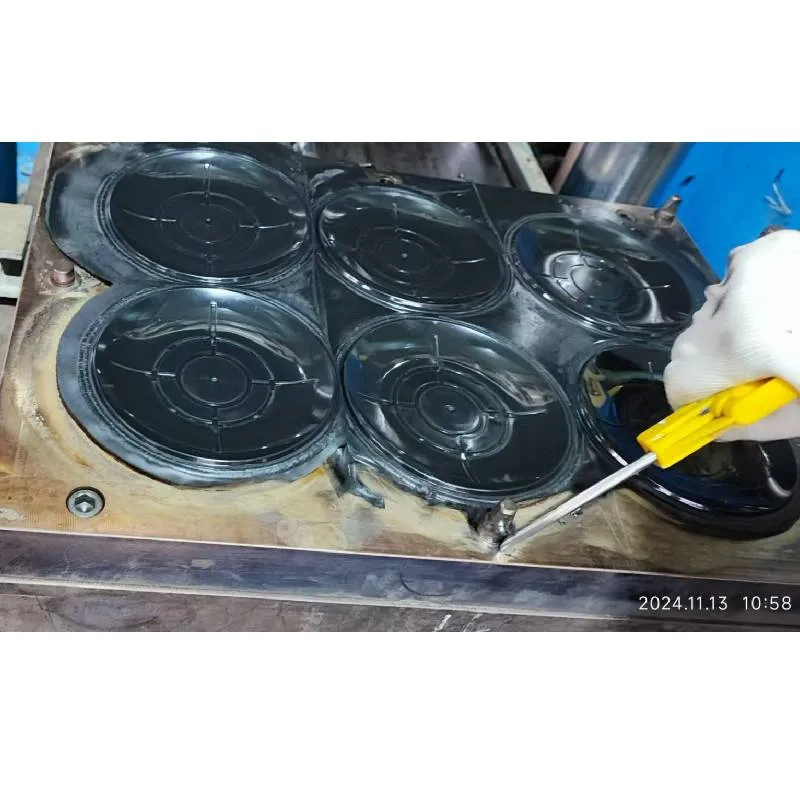
The foundational materials for rubber parts are broadly categorized into natural rubber (NR) and synthetic rubbers. Natural rubber, derived from the latex of the Hevea brasiliensis tree, excels in tensile strength and resilience but suffers from limited resistance to oils, ozone, and UV exposure. Synthetic rubbers, created through polymerization processes, offer tailored properties. Common examples include Styrene-Butadiene Rubber (SBR), known for its abrasion resistance and cost-effectiveness; Nitrile Rubber (NBR), prized for its oil and fuel resistance; Ethylene Propylene Diene Monomer (EPDM), demonstrating excellent weatherability and heat resistance; and Silicone Rubber (VMQ), offering a wide temperature range and biocompatibility. The manufacturing processes vary significantly depending on the desired part geometry and application. Compression molding is prevalent for simple shapes, utilizing heat and pressure to form the rubber within a cavity. Injection molding is employed for complex geometries and high-volume production, injecting molten rubber into a mold. Extrusion is suitable for continuous profiles like hoses and seals, forcing rubber through a die. Calendering produces sheets of rubber, often used for coating applications. Critical parameters during manufacturing include precise temperature control to ensure proper vulcanization (cross-linking of polymer chains), mold design for uniform pressure distribution, and accurate material mixing to achieve desired compound properties. Deviations in these parameters can lead to defects like voids, incomplete cure, or inconsistent mechanical properties. Post-processing operations like trimming, cleaning, and surface finishing are also crucial for dimensional accuracy and functional performance.
Performance & Engineering
Performance of rubber parts is intrinsically linked to their ability to withstand various stresses and environmental conditions. Force analysis is crucial, particularly in applications involving compression, tension, shear, or torsion. Finite Element Analysis (FEA) is routinely used to predict stress distribution, deformation, and potential failure points under load. Environmental resistance encompasses a wide spectrum of factors. Temperature extremes can induce changes in hardness, elasticity, and overall durability. Chemical exposure (oils, solvents, acids, bases) can cause swelling, degradation, or dissolution. Ozone cracking, a common failure mode in unsaturated rubbers, occurs due to oxidative attack. UV radiation can lead to chain scission and embrittlement. Compliance requirements are dictated by industry standards and application-specific regulations. For example, automotive seals must meet stringent requirements for fluid resistance and temperature stability, adhering to standards like SAE J200. Food-grade rubber parts must comply with FDA regulations for biocompatibility and non-toxicity. Aerospace applications necessitate adherence to AMS standards for material specifications and performance characteristics. Functional implementation often involves considerations like sealing efficiency (leakage rates), vibration damping coefficients, and electrical insulation properties. Proper design of geometric features, such as lip seals or convoluted bellows, is critical for optimizing performance in specific applications.
Technical Specifications
| Material Type | Hardness (Shore A) | Tensile Strength (MPa) | Elongation at Break (%) |
|---|---|---|---|
| Natural Rubber (NR) | 60-80 | 20-30 | 500-800 |
| Styrene-Butadiene Rubber (SBR) | 50-70 | 15-25 | 300-600 |
| Nitrile Rubber (NBR) | 40-90 | 10-30 | 200-500 |
| Ethylene Propylene Diene Monomer (EPDM) | 50-80 | 12-20 | 300-600 |
| Silicone Rubber (VMQ) | 20-80 | 8-20 | 100-500 |
| Fluorocarbon Rubber (FKM/Viton) | 60-90 | 15-35 | 100-300 |
Failure Mode & Maintenance
Rubber parts are susceptible to a variety of failure modes, impacting their service life and reliability. Fatigue cracking, caused by cyclic loading, initiates at stress concentrators and propagates through the material. Swelling due to chemical exposure alters dimensions and compromises mechanical properties. Ozone cracking, as mentioned previously, results in surface fissures and eventual component failure. Compression set, the permanent deformation after prolonged compression, reduces sealing effectiveness and damping capacity. Oxidation leads to chain scission and embrittlement, diminishing elasticity. Abrasion, particularly in dynamic applications, causes material loss and dimensional changes. Delamination can occur in composite rubber parts or due to poor adhesion between rubber and substrate. Maintenance strategies aim to mitigate these failure modes. Regular inspection for cracks, swelling, or discoloration is essential. Lubrication can reduce friction and wear in dynamic applications. Protecting rubber parts from exposure to ozone, UV radiation, and harsh chemicals extends their lifespan. Proper storage conditions (temperature, humidity, light exposure) prevent degradation. For critical applications, preventative replacement based on predicted service life or operating conditions is recommended. Selecting the appropriate rubber compound for the specific application environment is the most crucial preventative measure.
Industry FAQ
Q: What are the key differences between compression set and permanent strain in rubber materials?
A: Compression set specifically refers to the permanent deformation after a rubber part has been subjected to a compressive load for an extended period. It's a measure of the material’s ability to recover its original thickness. Permanent strain is a broader term encompassing any irreversible deformation – tensile, compressive, or shear – induced by any type of stress. Compression set is a specific type of permanent strain, focusing solely on compression.
Q: How does temperature affect the performance of nitrile rubber (NBR)?
A: NBR’s performance is significantly affected by temperature. At low temperatures, NBR becomes less flexible and can lose its impact resistance. At high temperatures, NBR can experience thermal degradation, leading to reduced tensile strength and increased compression set. The upper temperature limit for continuous use is typically around 120°C, although specialized formulations can extend this range.
Q: What factors influence the choice between using a natural rubber or a synthetic rubber for a specific application?
A: Natural rubber excels in tensile strength, tear resistance, and resilience, making it suitable for applications requiring high dynamic performance. However, synthetic rubbers are chosen when specific environmental resistance is needed. NBR provides oil resistance, EPDM offers weatherability, silicone provides temperature resistance, and fluorocarbon rubber provides resistance to aggressive chemicals. Cost also plays a role; synthetic rubbers often are more expensive than natural rubber.
Q: What is the significance of durometer hardness when selecting a rubber compound?
A: Durometer hardness, measured using the Shore durometer scale, indicates the rubber’s resistance to indentation. A higher durometer value signifies a harder, more rigid material, while a lower value indicates a softer, more flexible material. Selecting the appropriate durometer is crucial for ensuring the part can withstand the applied loads and maintain its functionality. Softer materials are better for sealing, while harder materials are more resistant to abrasion.
Q: What are common methods for testing the chemical resistance of a rubber compound?
A: Common methods include immersion testing, where the rubber sample is submerged in the chemical of interest for a specified period, followed by assessment of changes in weight, volume, hardness, tensile strength, and elongation. Swelling tests measure the percentage increase in volume due to chemical absorption. Stress-crack resistance testing assesses the material’s susceptibility to cracking under sustained stress in the presence of the chemical.
Conclusion
Rubber parts remain indispensable in a vast array of industrial applications, owing to their unique combination of elasticity, damping characteristics, and sealing capabilities. The careful selection of rubber compounds, coupled with precise control over manufacturing processes, is paramount to ensuring long-term performance and reliability. Understanding the inherent failure modes – fatigue cracking, chemical degradation, and compression set – and implementing appropriate preventative maintenance strategies are essential for minimizing downtime and maximizing the service life of these critical components.
Future developments in rubber technology will likely focus on enhancing material properties through advanced compounding techniques, exploring sustainable and bio-based rubber sources, and integrating smart sensors into rubber parts for real-time condition monitoring. These advancements will further expand the application scope of rubber components and address the evolving demands of modern industrial environments. Continued research into predictive failure analysis and proactive maintenance protocols will also be critical for optimizing the overall cost-effectiveness and reliability of rubber-based systems.