
Introduction
Plastic wheel rollers are load-bearing elements designed to facilitate linear or rotational motion, commonly employed in conveyor systems, material handling equipment, and a wide range of industrial machinery. Their function centers on minimizing friction and wear between moving parts and a supporting surface. Unlike metallic rollers, plastic wheel rollers offer advantages in corrosion resistance, noise reduction, and non-marking operation, making them suitable for applications where cleanliness and material compatibility are critical. This guide provides a comprehensive technical overview, encompassing material science, manufacturing processes, performance characteristics, failure modes, and relevant industry standards. The increasing demand for lightweight, cost-effective, and chemically inert components drives the continued development and adoption of these rollers across numerous industries, including logistics, food processing, pharmaceuticals, and automated manufacturing.
Material Science & Manufacturing
Plastic wheel rollers are predominantly manufactured from thermoplastic polymers, with Polypropylene (PP), Polyethylene (PE), Polyvinyl Chloride (PVC), Nylon (Polyamide 6 & 66), and Polyurethane (PU) being the most prevalent materials. PP and PE offer low cost and good chemical resistance, ideal for general-purpose applications. PVC provides rigidity and abrasion resistance but exhibits limited temperature tolerance. Nylon demonstrates high strength, toughness, and resistance to wear, particularly in bearing surfaces. Polyurethane possesses exceptional load-bearing capacity, resilience, and resistance to oils and solvents. The selection of material is dictated by the specific application requirements, considering factors such as load capacity, operating temperature, chemical exposure, and desired lifespan.
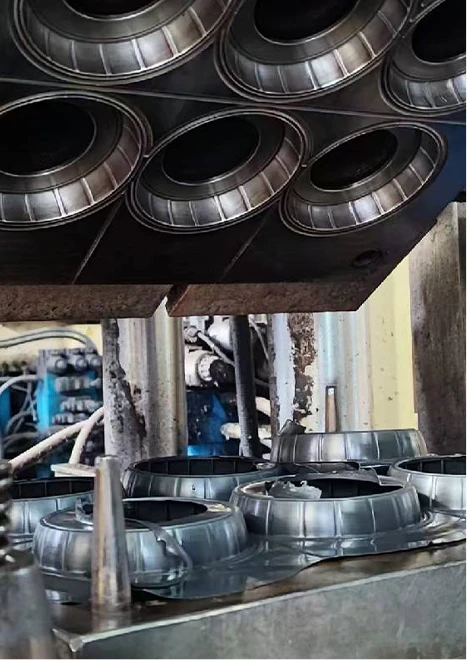
Manufacturing typically involves injection molding, a process where molten plastic is injected into a closed mold cavity under high pressure. Key parameters during injection molding include melt temperature, mold temperature, injection pressure, and cooling rate. Accurate control of these parameters is crucial to minimize internal stresses, warpage, and dimensional inaccuracies. For nylon rollers, a drying process is essential prior to molding to remove absorbed moisture, preventing hydrolysis and ensuring optimal mechanical properties. Some rollers incorporate internal metallic bearings (typically steel or stainless steel) to enhance load capacity and reduce wear on the plastic component. These bearings are often overmolded during the injection process to achieve a robust mechanical interlock. Extrusion can be used for producing rollers with complex profiles, although injection molding remains the dominant process due to its higher precision and suitability for high-volume production. Post-molding operations may include deburring, surface finishing, and dimensional inspection.
Performance & Engineering
The performance of plastic wheel rollers is fundamentally governed by their load-bearing capacity, resistance to deformation, and frictional characteristics. Load capacity is determined by the material's flexural modulus, roller diameter, and bearing design (if applicable). Finite Element Analysis (FEA) is frequently employed during the design phase to optimize roller geometry and predict stress distribution under various loading conditions. Consideration must be given to both static loads (constant weight) and dynamic loads (impact or cyclical forces). The coefficient of friction between the roller surface and the supporting rail or track is a critical parameter influencing energy efficiency and wear rate. Lower coefficients of friction minimize power consumption and extend the service life of the roller and associated components. Environmental factors, such as temperature and humidity, significantly impact the mechanical properties of plastics. Elevated temperatures can reduce strength and stiffness, while exposure to UV radiation can cause degradation and embrittlement. Chemical resistance is also paramount, particularly in applications involving corrosive substances. Rollers intended for outdoor use or harsh environments require UV stabilizers and chemical-resistant formulations. Bearing selection, if integrated, impacts performance. Proper lubrication and sealing prevent contamination and ensure smooth rotation.
Technical Specifications
| Material | Diameter (mm) | Load Capacity (kg) | Hardness (Shore D) |
|---|---|---|---|
| Polypropylene (PP) | 25 | 50 | 60 |
| Polyethylene (PE) | 32 | 75 | 55 |
| Polyvinyl Chloride (PVC) | 40 | 100 | 70 |
| Nylon 6 | 50 | 150 | 75 |
| Nylon 66 | 63 | 200 | 80 |
| Polyurethane (PU) | 75 | 300 | 90 |
Failure Mode & Maintenance
Plastic wheel rollers are susceptible to several failure modes, including wear, fatigue cracking, deformation, and chemical degradation. Wear occurs due to abrasive contact with the supporting surface, leading to gradual material loss and dimensional reduction. Fatigue cracking can develop under cyclical loading, particularly in areas of high stress concentration, such as the roller core or bearing interface. Deformation, characterized by flattening or ovalization of the roller, results from exceeding the material's yield strength or prolonged exposure to elevated temperatures. Chemical degradation involves the breakdown of the polymer structure due to exposure to corrosive substances, leading to embrittlement and loss of mechanical properties. Oxidation, particularly in polymers exposed to air and heat, can also contribute to degradation.
Preventive maintenance is crucial to maximize roller lifespan. Regular inspection for wear, cracks, and deformation is recommended. Lubrication of bearings (if present) reduces friction and prevents premature failure. Cleaning rollers to remove dirt, debris, and chemical contaminants is essential. In applications involving high loads or abrasive environments, rollers should be replaced proactively before catastrophic failure occurs. For applications exposed to UV radiation, consider periodic inspection for signs of UV degradation. If deformation is observed, the roller should be replaced, as restoring its original shape is generally not feasible. When replacing rollers, it is vital to select a material and design that are compatible with the operating conditions and load requirements.
Industry FAQ
Q: What is the primary advantage of using plastic wheel rollers over steel rollers in food processing applications?
A: The primary advantage is that plastic wheel rollers, particularly those made from FDA-compliant materials like PP or PE, do not rust or corrode, eliminating the risk of metal contamination in food products. They are also generally quieter and less likely to damage delicate food items compared to steel rollers.
Q: How does temperature affect the load capacity of nylon wheel rollers?
A: Elevated temperatures significantly reduce the flexural modulus and yield strength of nylon, leading to a decrease in load capacity. At temperatures exceeding 80°C, the load capacity can be reduced by as much as 50%, depending on the specific grade of nylon.
Q: What are the key considerations when selecting a wheel roller for a conveyor system operating in a chemically aggressive environment?
A: The chemical compatibility of the roller material with the specific chemicals present is paramount. Polyurethane generally offers the broadest chemical resistance, followed by polypropylene and polyethylene. PVC should be avoided in environments with strong solvents. Testing material samples with the chemicals in question is highly recommended before full-scale implementation.
Q: What is the typical lifespan of a polyurethane wheel roller in a high-load application?
A: The lifespan of a polyurethane wheel roller in a high-load application varies widely depending on factors such as load magnitude, operating speed, operating temperature, and the nature of the supporting surface. Under optimal conditions, a properly selected and maintained polyurethane roller can last for several years, potentially exceeding 5 million cycles.
Q: How do I determine if a plastic wheel roller is exhibiting signs of fatigue failure?
A: Signs of fatigue failure include the presence of small cracks radiating from areas of high stress concentration (e.g., the roller core or bearing interface). A noticeable increase in noise levels or vibration during operation can also indicate fatigue cracking. Visual inspection is often sufficient for early detection, but non-destructive testing methods, such as ultrasonic inspection, can provide a more thorough assessment.
Conclusion
Plastic wheel rollers represent a versatile and cost-effective solution for a wide range of material handling and motion control applications. Their selection necessitates a comprehensive understanding of material properties, manufacturing processes, performance characteristics, and potential failure modes. By carefully considering the operating environment, load requirements, and chemical exposure, engineers can optimize roller design and material selection to maximize lifespan and ensure reliable operation.
Continued advancements in polymer technology and manufacturing techniques are driving improvements in the performance and durability of plastic wheel rollers. Future trends include the development of self-lubricating materials, enhanced UV resistance, and the integration of smart sensors for real-time monitoring of roller condition and predictive maintenance. The growing emphasis on sustainability is also leading to increased demand for recycled and bio-based plastic roller materials.